
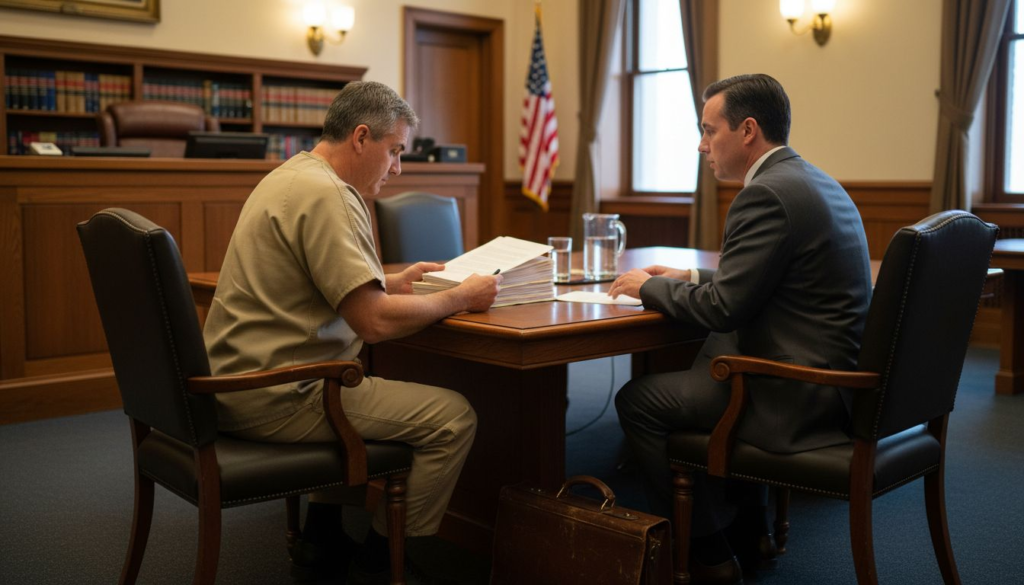
Facing a legal dispute behind bars can feel overwhelming, especially when resources are limited. For many incarcerated Americans and self-represented litigants, understanding the scope of federal court litigation is crucial for fighting civil rights violations or challenging federal statutes. Knowing how the United States federal court system works and what makes a case eligible for federal review arms you with insight needed to move forward with confidence and strategic purpose.
Table of Contents
- Defining Federal Court Litigation and Its Scope
- Key Categories of Federal Court Cases
- Step-by-Step Federal Litigation Process
- Federal Rules and PLRA Compliance Requirements
- Rights, Risks, and Common Mistakes for Prisoners
Key Takeaways
| Point | Details |
|---|---|
| Understanding Federal Jurisdiction | Federal courts have specific jurisdictional limitations; cases must involve federal law, constitutional issues, or meet diversity jurisdiction criteria. |
| Complex Litigation Process | Federal litigation involves multiple stages including case initiation, initial pleadings, discovery, and pretrial proceedings, requiring careful navigation of procedural rules. |
| PLRA Compliance for Prisoners | The Prison Litigation Reform Act requires prisoners to exhaust administrative remedies and adhere to strict filing and conduct requirements to avoid dismissal of claims. |
| Avoiding Common Mistakes | Prisoners must be vigilant about procedural compliance, proper documentation, and realistic expectations regarding their rights and the litigation process. |
Defining Federal Court Litigation and Its Scope
Federal court litigation represents a specialized legal process within the United States judicial system, focusing on resolving disputes through federal court channels. Federal courts operate with distinct jurisdictional limitations, hearing cases that arise under federal statutes, constitutional provisions, or treaties, which distinguishes them from state court systems.
The federal court system consists of three primary levels: district courts (trial courts), circuit courts (appellate courts), and the Supreme Court. These courts handle cases involving federal law and constitutional issues, with each level serving a specific function in interpreting and applying legal principles. District courts serve as the initial trial venues where evidence is presented and initial legal determinations are made. Circuit courts then review district court decisions for potential legal errors, while the Supreme Court represents the final appellate level with nationwide judicial authority.
For prisoners seeking legal recourse, understanding federal court litigation requires recognizing the specific circumstances under which federal courts can hear a case. These typically include:
- Civil rights violations
- Constitutional claims
- Federal statute interpretation
- Cases involving diversity jurisdiction
- Habeas corpus petitions
- Appeals from administrative agency decisions
Prisoners must demonstrate that their case falls within one of these federal jurisdictional categories and meets procedural requirements for filing. Each type of claim requires precise documentation, adherence to specific legal standards, and a comprehensive understanding of federal court procedures.
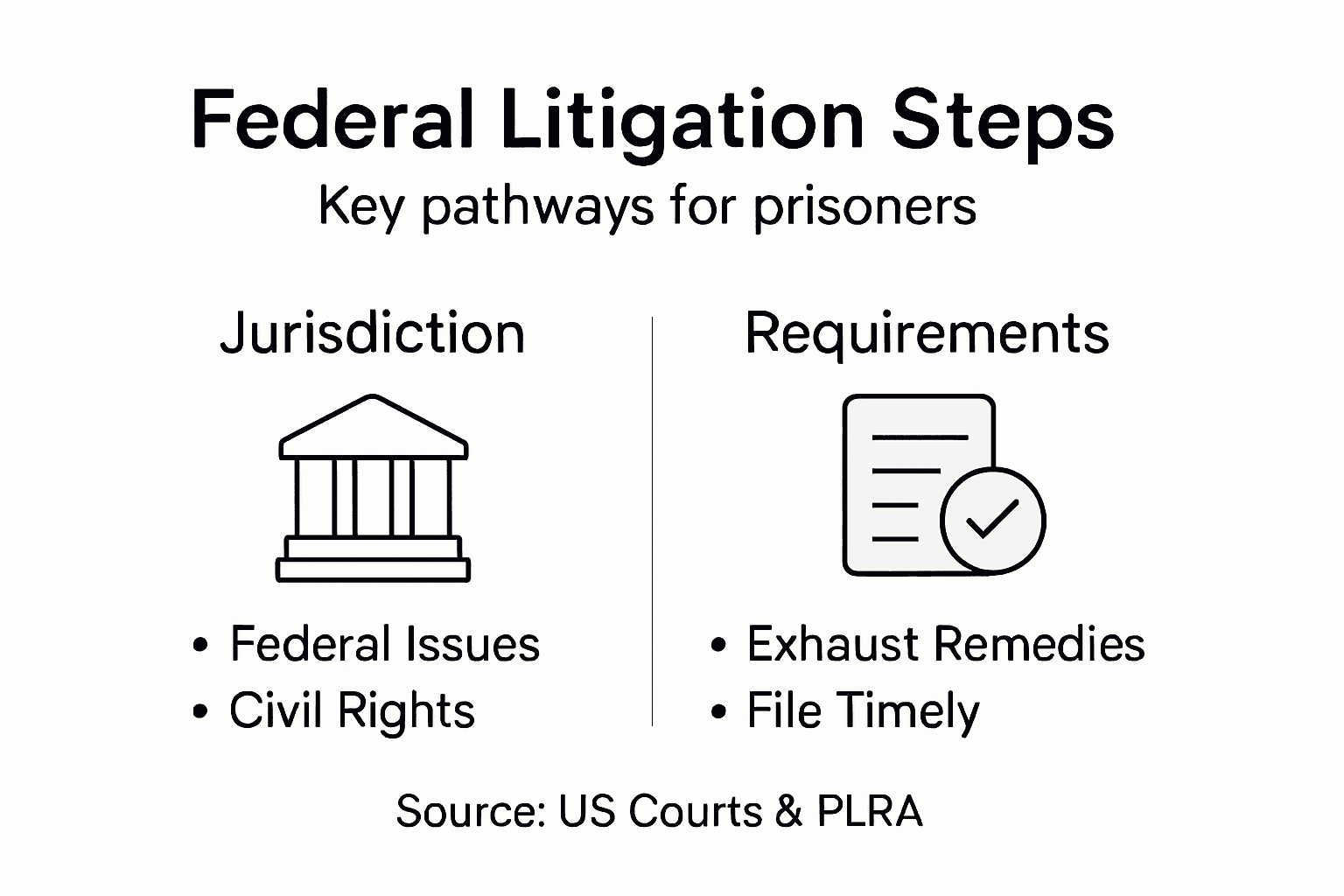
Pro tip: Always verify your specific case meets federal court jurisdictional requirements before investing time and resources into preparing a federal litigation document.
Key Categories of Federal Court Cases
Federal court cases encompass a diverse range of legal proceedings that address critical national legal issues. Federal courts hear cases with specific jurisdictional requirements, primarily focusing on disputes involving federal laws, constitutional provisions, and interstate conflicts. These cases are strategically categorized to ensure systematic judicial review and maintain the integrity of the American legal system.
The primary categories of federal court cases can be comprehensively divided into several key classifications:
Here’s a summary of federal court case categories and the typical parties involved:
| Case Category | Typical Parties | Common Issue Focus |
|---|---|---|
| Federal Question | Individuals, federal agencies | Federal law interpretation |
| Diversity Jurisdiction | Citizens of different states | Multistate disputes |
| Criminal Prosecution | Federal government, defendants | Serious federal crimes |
| Civil Rights | Prisoners, employees, institutions | Rights and discrimination |
- Federal Question Cases
- Disputes directly involving federal statutes
- Constitutional interpretation challenges
- Cases involving federal government agencies
- Violations of federal laws or regulations
- Diversity Jurisdiction Cases
- Conflicts between citizens of different states
- Monetary disputes exceeding $75,000
- Cases where parties are from different states
- Ensuring neutral judicial review
- Criminal Prosecution Cases
- Federal criminal statute violations
- Interstate criminal activities
- Prosecutions initiated by federal government
- Complex federal crime investigations
- Civil Rights Cases
- Constitutional rights violations
- Discrimination claims
- Federal employment disputes
- Protection of individual liberties
Federal courts maintain strict jurisdictional limitations that distinguish them from state courts. Prisoners and litigants must carefully evaluate their specific case details to determine whether federal court jurisdiction applies, understanding that not all legal disputes qualify for federal court review.
Each case category demands precise documentation, adherence to specific procedural requirements, and a comprehensive understanding of federal legal standards. Successful navigation requires meticulous preparation and a clear demonstration that the case meets federal court jurisdictional criteria.

Pro tip: Thoroughly research and document the specific federal jurisdictional requirements applicable to your case before initiating federal court litigation.
Step-by-Step Federal Litigation Process
Federal civil litigation involves a complex series of procedural steps that require careful navigation and strategic planning. The process begins with the critical stage of case initiation, where the plaintiff must carefully draft and file a comprehensive complaint that clearly establishes federal court jurisdiction and outlines the legal basis for the claim.
The key stages of federal litigation typically unfold as follows:
- Case Initiation
- Drafting a detailed complaint
- Establishing federal court jurisdiction
- Identifying legal grounds for the claim
- Determining appropriate venue
- Initial Pleadings
- Filing the complaint with the federal district court
- Serving legal documents to defendants
- Defendant’s response (answer or motion to dismiss)
- Potential preliminary motions
- Discovery Phase
- Exchange of relevant documents and evidence
- Depositions and witness interviews
- Interrogatories and written requests
- Expert witness preparation
- Pretrial Proceedings
- Settlement negotiations
- Summary judgment motions
- Alternative dispute resolution
- Potential mediation or arbitration
Pro se litigants must carefully follow federal court procedural rules throughout the litigation process. Each stage demands meticulous attention to detail, adherence to strict court guidelines, and a comprehensive understanding of legal requirements. Prisoners and self-represented litigants must be particularly vigilant about procedural compliance, as even minor errors can significantly impact case outcomes.
Successful federal litigation requires more than just understanding the legal merits of a case. It demands strategic planning, thorough documentation, and a comprehensive approach to presenting legal arguments. Litigants must anticipate potential challenges, prepare robust evidence, and demonstrate a clear understanding of federal court expectations.
Pro tip: Carefully document every step of your litigation process and maintain organized, detailed records of all court communications and case-related materials.
Federal Rules and PLRA Compliance Requirements
The Prison Litigation Reform Act establishes critical guidelines for prisoners seeking legal recourse through federal court systems. This comprehensive legislation aims to streamline prisoner litigation while preventing frivolous claims, imposing specific procedural requirements that significantly impact how incarcerated individuals can file and pursue legal actions.
The PLRA introduces several key compliance requirements that prisoners must navigate carefully:
- Administrative Exhaustion
- Complete all internal prison grievance procedures
- Document each step of the administrative process
- Provide detailed records of grievance attempts
- Demonstrate full exhaustion before filing lawsuit
- Filing Fee Restrictions
- Implement the “three strikes” rule
- Limited fee waiver opportunities
- Partial payment requirements for indigent prisoners
- Restrictions on filing without full payment
- Screening and Dismissal Provisions
- Mandatory initial court screening of complaints
- Immediate dismissal of frivolous or malicious claims
- Stringent standards for legal sufficiency
- Limits on potential damage claims
- Litigation Conduct Limitations
- Restrictions on multiple similar filings
- Consequences for repeated unsuccessful litigation
- Careful documentation requirements
- Potential sanctions for non-compliance
Prisoners must carefully understand PLRA compliance requirements to successfully navigate federal court litigation. The Act intentionally creates significant barriers to prevent what courts perceive as abusive litigation practices, requiring meticulous preparation and strategic approach to any legal action.
Successful navigation of these requirements demands comprehensive documentation, understanding of procedural nuances, and a strategic approach to presenting legal claims. Prisoners must demonstrate not just the merit of their case, but also strict adherence to complex procedural mandates that govern federal court litigation.
This table compares key PLRA compliance hurdles and their practical implications for prisoners:
| Compliance Requirement | Practical Impact | Typical Consequence |
|---|---|---|
| Administrative Exhaustion | Must pursue all prison grievance steps | Dismissal if not completed |
| Filing Fee Restrictions | Partial payments, limited waivers | Reduced access to lawsuits |
| Screening of Complaints | Court reviews sufficiency before trial | Early dismissal for weakness |
| Litigation Conduct Limits | Restrictions on repeat filings | Sanctions or case rejection |
Pro tip: Maintain exhaustive, dated records of all administrative grievance attempts and carefully review each requirement before initiating federal court litigation.
Rights, Risks, and Common Mistakes for Prisoners
Constitutional rights remain fundamental for incarcerated individuals despite their restricted environment. Understanding these rights is crucial for prisoners contemplating federal litigation, as navigating the complex legal landscape requires strategic awareness of both protections and potential pitfalls.
Common risks and critical mistakes in prisoner litigation include:
- Procedural Errors
- Missing critical filing deadlines
- Inadequate documentation
- Failing to exhaust administrative remedies
- Incomplete or improperly formatted legal documents
- Rights Misunderstandings
- Misconceptions about legal protections
- Overestimating potential litigation outcomes
- Underestimating procedural complexity
- Unrealistic expectations about relief
- Documentation Challenges
- Insufficient evidence collection
- Lack of detailed record keeping
- Poor communication documentation
- Inability to substantiate claims
- Strategic Litigation Mistakes
- Filing multiple frivolous claims
- Failing to understand jurisdictional requirements
- Ignoring court-specific procedural rules
- Presenting emotionally driven versus legally substantive arguments
Federal court litigation demands precise procedural compliance from prisoners. Each legal action requires careful preparation, understanding of complex rules, and a strategic approach that goes beyond simply expressing grievances. Prisoners must transform personal experiences into legally cognizable claims that meet stringent federal court standards.
Successful navigation of prisoner litigation requires more than legal knowledge. It demands emotional discipline, meticulous documentation, and a comprehensive understanding of how federal courts evaluate civil rights claims. Prisoners must approach litigation as a formal, strategic process, carefully constructing arguments that demonstrate constitutional violations while adhering to strict procedural requirements.
Pro tip: Systematically document every interaction, preserve all potential evidence, and consult available legal resources before initiating any federal court litigation.
Navigate Federal Court Litigation with Expert Document Preparation Support
Federal court litigation for prisoners demands precise knowledge of complex procedures such as the Prison Litigation Reform Act compliance and the careful drafting of habeas corpus or civil rights claims. Many incarcerated individuals face challenges like exhausting administrative remedies and strict filing requirements that can quickly derail their cases if not handled expertly. If you are overwhelmed by procedural hurdles or worried about missing critical deadlines, you are not alone.

Turn complexity into clarity with Prisoner Legal Aid. Our specialized legal document preparation services help prisoners and self-represented litigants draft, format, and submit federal court filings that meet stringent federal standards. Benefit from confidentiality, affordable pricing, and quick turnaround times so you can focus on your case without procedural mistakes holding you back. Learn how to fulfill PLRA compliance requirements and build a strong foundation for your civil rights or habeas corpus claims today. Do not delay your federal case progress—get the right support now by visiting Prisoner Legal Aid and take the first step toward effective federal litigation.
Frequently Asked Questions
What is federal court litigation for prisoners?
Federal court litigation for prisoners refers to legal processes in which incarcerated individuals seek to resolve disputes or claims through the federal court system, often focusing on violations of their civil rights or constitutional protections.
What types of cases can prisoners file in federal court?
Prisoners can file various types of cases in federal court, including civil rights violations, constitutional claims, federal statute interpretations, diversity jurisdiction cases, habeas corpus petitions, and appeals from administrative agency decisions.
What are the key requirements of the Prison Litigation Reform Act (PLRA)?
Key requirements of the PLRA include administrative exhaustion of all internal grievance procedures, restrictions on filing fees, screening and dismissal provisions for frivolous claims, and limitations on litigation conduct to prevent abuse of the court system.
How can prisoners ensure they comply with federal court procedures?
Prisoners can ensure compliance with federal court procedures by thoroughly documenting their case, adhering to filing deadlines, understanding jurisdictional requirements, and following the specific procedural rules outlined for their claims.