
Facing the court system without outside support brings serious concerns about protecting your private information. For many self-represented litigants and incarcerated individuals across the United States, the risk of sensitive legal details becoming exposed is a real and personal fear. Understanding confidentiality requirements and how to properly secure your documents is crucial, whether you are preparing for a hearing in federal or state court. This guide highlights practical steps and security measures, empowering you to protect your privacy and build strong legal filings.
Table of Contents
- Step 1: Assess Confidentiality Requirements For Your Case
- Step 2: Gather And Secure Sensitive Client Information
- Step 3: Implement Document Storage And Transfer Protections
- Step 4: Limit Access To Confidential Legal Materials
- Step 5: Verify Compliance With Privacy Protocols
Quick Summary
| Key Point | Explanation |
|---|---|
| 1. Assess confidentiality needs | Evaluate your case’s unique privacy requirements thoroughly against legal standards. |
| 2. Secure sensitive client data | Implement strong data protection strategies to safeguard personal and legal documents effectively. |
| 3. Establish document access controls | Use strict access management to limit who can interact with sensitive legal materials. |
| 4. Maintain compliance verification | Regularly check your privacy protocols against current laws to ensure ongoing adherence. |
| 5. Document interaction logs | Keep thorough logs of all document access and transfers for accountability and tracking. |
Step 1: Assess Confidentiality Requirements for Your Case
Navigating the confidentiality landscape of your legal documents requires careful understanding of how courts evaluate sensitive information. In most cases, you will need to assess your specific situation against established legal standards to determine what protections might apply to your documents.
Understanding attorney confidentiality standards means recognizing that each case has unique privacy considerations. Courts typically examine several key factors when determining confidentiality, including the nature of the information, potential risks of disclosure, and whether revealing details could compromise your legal strategy or personal privacy. Some documents might qualify for specific protections like work product doctrine or common interest agreements, which can shield sensitive materials from general discovery.
As you move forward, remember that confidentiality assessments are not one-size-fits-all propositions. Your particular circumstances will dictate the level of protection available, so gathering comprehensive documentation and understanding potential vulnerabilities is crucial.
Here’s a summary of common legal document protection categories and their key characteristics:
| Protection Type | Legal Basis | Typical Usage | Vulnerability Risk |
|---|---|---|---|
| Attorney-Client Privilege | Statutory/Case Law | Legal consultation | Breach of confidentiality |
| Work Product Doctrine | Court rules | Litigation strategy | Unlawful disclosure |
| Common Interest Agreement | Mutual agreement | Shared legal defense | Miscommunication |
| Privacy Statutes | Federal/State laws | Personal information | Data breach |
Pro tip: Always consult with a legal professional who can provide personalized guidance specific to your case’s unique confidentiality requirements.
Step 2: Gather and Secure Sensitive Client Information
Securing sensitive client information requires a strategic approach that protects data from potential breaches and unauthorized access. Your goal is to create a robust system that safeguards personal and legal documents while maintaining their accessibility for legitimate purposes.
Implementing comprehensive data protection strategies means carefully managing how you collect, store, and handle confidential materials. This involves creating detailed inventories of your sensitive documents, limiting data collection to only what is absolutely necessary, and establishing strict access controls. Consider using encrypted digital storage solutions that require multilayer authentication, ensuring that only authorized individuals can view or modify critical information.
While gathering sensitive documents, maintain meticulous records of their origin, content, and potential vulnerability. Pay special attention to personal identifiers, legal statements, and any information that could potentially compromise your client’s privacy or legal strategy. Remember that each piece of information represents not just data, but someone’s personal and legal narrative.
Pro tip: Create a secure, offline backup system for your most critical documents and store them in a physically protected location with limited access.
Step 3: Implement Document Storage and Transfer Protections
Protecting your sensitive legal documents requires a comprehensive approach that safeguards information during both storage and transmission. Your primary goal is to create multiple layers of security that prevent unauthorized access while ensuring the documents remain accessible when needed.
Following critical document protection protocols means developing a systematic strategy for handling confidential materials. This involves establishing secure physical and digital storage solutions that include restricted access, encryption, and carefully controlled transfer mechanisms. Consider using locked fireproof safes for physical documents, paired with encrypted digital backups that require multilayer authentication. Your storage system should include clear tracking protocols that document every interaction with sensitive materials.

When transferring documents, minimize potential exposure by using secured communication channels. This might include encrypted email services, password protected file transfers, or physically secured courier services for particularly sensitive materials. Always maintain a detailed log of document movements, tracking who accessed the information, when, and for what purpose.
Pro tip: Create a comprehensive tracking log for every document transfer and storage interaction, including timestamps, authorized personnel, and specific access details.
Step 4: Limit Access to Confidential Legal Materials
Securing sensitive legal documents requires implementing robust access control mechanisms that protect confidential information from potential unauthorized exposure. Your goal is to create a strategic system that allows only authorized personnel to interact with critical legal materials.
Applying strict access management protocols means developing comprehensive policies that define who can access specific documents and under what circumstances. This involves creating detailed authorization levels, implementing multifactor authentication processes, and maintaining meticulous logs of every document interaction. Consider establishing a clear hierarchical system where access is granted based on specific roles and legitimate need to know. Digital access should include unique user credentials, time limited permissions, and automatic tracking of all document interactions.
Regularly review and update your access control systems to ensure they remain current with your evolving legal requirements. This might involve conducting periodic security audits, promptly revoking access for individuals who no longer require document permissions, and continuously monitoring potential vulnerability points in your information management process.
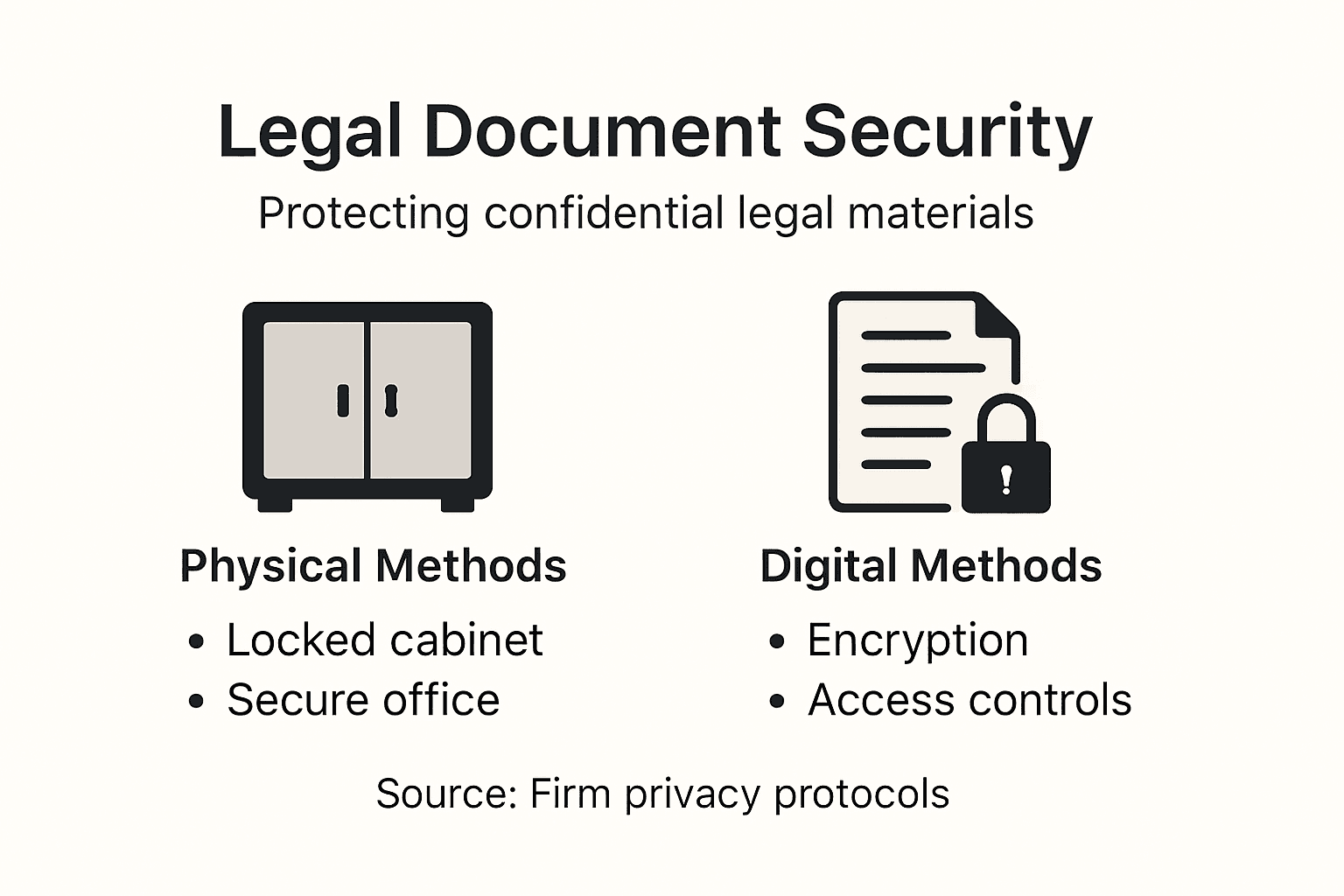
The following table highlights primary security measures for safeguarding client documents:
| Security Measure | Physical Storage | Digital Storage | Document Transfer |
|---|---|---|---|
| Restricted Access | Locked cabinet | User authentication | Encrypted channels |
| Backup Strategy | Offsite safe | Cloud encryption | Courier with tracking |
| Activity Logging | Sign-in logs | Access logs | Transfer logs |
| Periodic Review | Quarterly inspection | Security audits | Review transfer history |
Pro tip: Implement a mandatory quarterly review of all access permissions to immediately identify and remove outdated or unnecessary document access credentials.
Step 5: Verify Compliance With Privacy Protocols
Ensuring legal document confidentiality means meticulously evaluating your privacy protection strategies against current legal standards. Your objective is to create a comprehensive verification process that demonstrates your commitment to protecting sensitive client information.
Understanding data protection and privacy principles requires a systematic approach to evaluating your current privacy protocols. This involves conducting thorough internal assessments that examine how your organization collects, processes, stores, and potentially shares confidential information. Focus on key compliance elements such as purpose limitation, data minimization, lawfulness, transparency, and accountability. Create a detailed checklist that maps your existing practices against federal and state privacy regulations, paying special attention to specific requirements that impact legal document preparation.
Continuously update your compliance verification processes to adapt to evolving legal landscapes. This means staying informed about changes in privacy laws, conducting regular internal audits, and maintaining documentation that demonstrates your proactive approach to protecting client information. Consider engaging external privacy experts periodically to provide an independent assessment of your compliance mechanisms and identify potential areas of improvement.
Pro tip: Develop a living compliance documentation system that tracks all privacy protocol changes and maintains a clear audit trail of your verification efforts.
Protect Your Legal Documents With Expert Preparation You Can Trust
Handling sensitive legal documents demands strict confidentiality and secure management just like the careful steps outlined in this article. At Prisoner Legal Aid, we understand the critical importance of safeguarding your information while preparing crucial filings such as habeas corpus petitions and civil rights claims. Our services emphasize privacy, procedural compliance, and quick turnaround to help you meet your legal goals without risking unauthorized disclosure.
Whether you need assistance ensuring proper document security, limiting access to sensitive materials, or verifying privacy compliance, our streamlined platform guides you through every stage. Experience peace of mind knowing that your legal documents are crafted with expert care and confidentiality in mind.
Take control of your legal document preparation today. Visit Prisoner Legal Aid to access professional support and learn how we maintain strict confidentiality aligned with your case needs. Explore detailed service descriptions and client resources to get started with confidence.
Frequently Asked Questions
How do I assess the confidentiality requirements for my legal documents?
Assessing confidentiality requirements involves understanding the specific legal standards that apply to your case. Begin by reviewing the nature of your information, potential risks of disclosure, and how revealing details might impact your legal strategy. Compile a list of your documents and categorize them based on their sensitivity to better determine the necessary protections.
What steps should I take to secure sensitive client information?
To secure sensitive client information, implement comprehensive data protection strategies that include encrypted digital storage solutions and strict access controls. Start by creating an inventory of sensitive documents, limiting data collection, and ensuring only authorized personnel have access to this information. Conduct a security audit every few months to maintain a secure environment.
How can I protect legal documents during storage and transfer?
To protect legal documents during storage and transfer, establish layered security protocols that include encryption, restricted access, and detailed tracking of document movements. Create a secure storage system, such as locked cabinets for physical documents and password-protected files for digital ones. Always use secured communication channels for transferring documents to minimize unauthorized exposure.
What measures should I implement for managing access to confidential legal materials?
Implement strict access management protocols to control who can access confidential legal materials. Define authorization levels, adopt multifactor authentication, and keep detailed logs of document interactions. Regularly review access permissions at least quarterly to identify and revoke access that is no longer necessary.
How do I verify compliance with privacy protocols for legal document preparation?
To verify compliance with privacy protocols, conduct thorough internal assessments that examine how client information is collected, processed, and shared. Create a compliance checklist against legal requirements and update it continuously. Consider performing annual audits and seeking external privacy expert evaluations to enhance your verification process.