

Facing the courts on your own can feel overwhelming, especially when clear paperwork is the difference between getting heard and hitting a wall. For incarcerated Americans navigating habeas corpus petitions and civil rights claims, legal document preparers offer critical help in getting court forms completed and filed without breaking the bank. Discover how these professionals operate within strict rules so you can make informed choices and avoid common pitfalls when handling your own legal case.
Table of Contents
- Legal Document Preparer: Definition And Basics
- Types Of Documents Prepared For Court
- State-Based Qualifications And Registration Rules
- How Legal Document Preparers Support Self-Represented Clients
- Legal Limits, Risks, And Common Pitfalls
Key Takeaways
| Point | Details |
|---|---|
| Role of Legal Document Preparer | Legal Document Preparers assist in preparing legal documents without providing legal advice or representation, primarily helping self-represented individuals. |
| Consumer Protections | They are often required to be registered and bonded in certain states, ensuring accountability and professional standards. |
| Document Types | Prepares various court-related documents across multiple areas such as civil litigation, family law, and probate, focusing on procedural accuracy. |
| Professional Boundaries | Clear communication of their limitations is vital to prevent misunderstandings and ensure compliance with legal regulations. |
Legal Document Preparer: Definition and Basics
A legal document preparer is a specialized professional authorized to assist individuals in preparing legal documents without providing legal representation or advice. These professionals play a critical role in supporting self-represented litigants, particularly those who cannot afford traditional legal services. Legal document assistants operate within a carefully regulated framework designed to protect consumer interests.
The core responsibilities of a legal document preparer include:
- Helping clients complete complex legal forms accurately
- Ensuring documents meet specific court formatting requirements
- Filing documents on behalf of self-represented individuals
- Maintaining strict confidentiality and professional standards
Unlike attorneys, legal document preparers cannot provide legal advice or represent clients in court. Their primary function is to support individuals navigating legal procedures by providing technical document preparation assistance. In states like California, these professionals must be registered and bonded), which helps protect consumers from potential misconduct.
Here’s how legal document preparers compare to attorneys in practice:
| Aspect | Legal Document Preparer | Attorney |
|---|---|---|
| Legal Advice | Not permitted | Central to their role |
| Court Representation | Prohibited | Allowed and expected |
| Service Cost | Generally lower | Often significantly higher |
| Consumer Protections | Bonded and registered in some states | Governed by the bar and malpractice laws |
| Document Preparation | Core service, technical focus | Included as part of case strategy |
Professional boundaries are crucial in this role. Legal document preparers must clearly communicate their limitations, ensuring clients understand they are receiving document preparation services, not legal representation. They focus on procedural support, helping individuals translate their legal needs into properly formatted court documents.

Pro tip: Always verify a legal document preparer’s credentials and registration status before engaging their services to ensure professional and legal compliance.
Types of Documents Prepared for Court
Legal document preparers assist self-represented individuals by preparing a wide range of court-related legal documents. These professionals help clients navigate complex legal paperwork across multiple practice areas, ensuring documents meet specific court formatting and procedural requirements.
Typical documents prepared by legal document assistants include:
-
Civil Litigation Documents
- Pleadings
- Motions
- Responses and replies
- Petitions
- Evidence summaries
-
Family Law Documents
- Divorce petitions
- Child custody agreements
- Spousal support requests
- Property division statements
- Name change petitions
-
Probate Court Documents
- Estate administration forms
- Guardianship petitions
- Will contest documents
- Inheritance claims
- Trust administration paperwork
While legal document preparers can help draft and format these documents, they are strictly prohibited from providing legal advice or representing clients in court. Their role is limited to technical document preparation, ensuring that self-represented individuals can effectively present their legal claims.
Legal document preparers bridge the gap between complex legal requirements and individuals who cannot afford traditional legal representation.
Procedural accuracy is critical in document preparation. Even minor formatting errors can result in court rejection, making the expertise of these professionals invaluable for individuals navigating the legal system independently.
Pro tip: Always request a detailed review of your documents before filing to ensure they meet specific court formatting and procedural requirements.
State-Based Qualifications and Registration Rules
Legal document preparers must navigate complex state-specific registration requirements that vary significantly across different jurisdictions. These regulations aim to protect consumers by establishing professional standards and preventing unauthorized legal practice.
Key qualification requirements typically include:
-
Educational Qualifications
- ABA-approved paralegal program completion
- Law-related work experience
- Specialized legal document preparation training
-
Registration Mandates
- State registration application
- Mandatory surety bond posting
- Background checks
- Criminal conviction restrictions
- Periodic registration renewal
-
Compliance Standards
- Written service contracts
- Fee disclosure requirements
- Consumer protection compliance
- Continuing education credits
State-level regulations for document preparers demonstrate significant variation. For instance, California imposes stringent requirements including mandatory registration, bond posting, and periodic continuing education, while other states might have more relaxed standards.
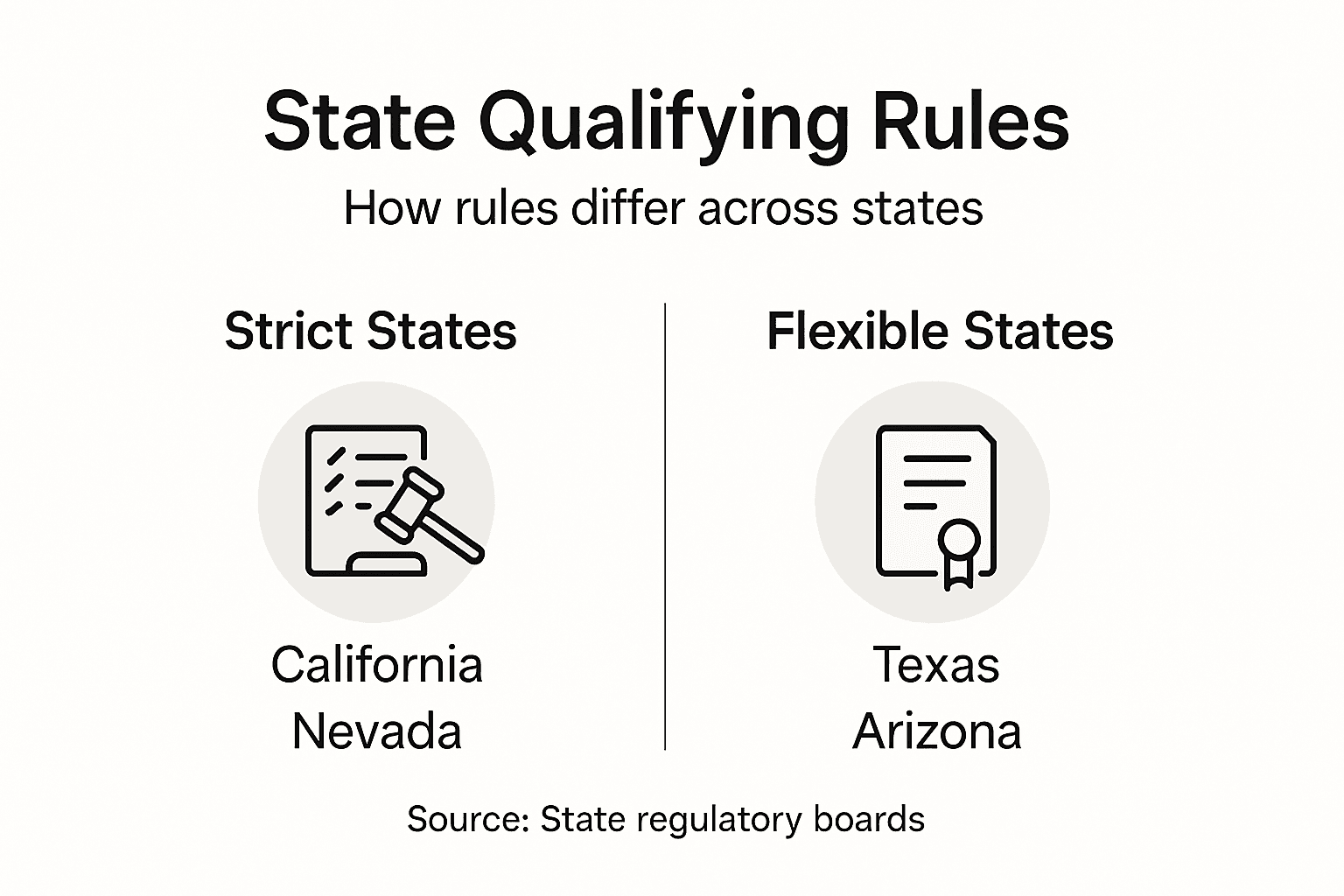
Below is a summary of state regulatory variations for legal document preparers:
| State Example | Registration Requirements | Ongoing Education | Surety Bond Requirement |
|---|---|---|---|
| California | Mandatory, with background check | Required | Yes, amount specified |
| Nevada | Registration and fingerprinting | Required | Yes, amount specified |
| Texas | No state registration | Not required | Not required |
| Arizona | Certification by Supreme Court | Required | Varies by county |
Professional registration protects both document preparers and their clients by establishing clear legal boundaries and professional conduct standards.
Ongoing Professional Development remains critical in this field. Many states require periodic renewal of credentials, mandating continuing education to ensure preparers stay current with evolving legal document requirements and procedural changes.
Pro tip: Research your specific state’s legal document preparer regulations to ensure full compliance and professional credibility.
How Legal Document Preparers Support Self-Represented Clients
Legal document preparers serve as critical allies for individuals navigating the complex legal system without attorney representation. Affordable legal document assistance enables self-represented clients to access judicial processes that might otherwise seem insurmountable.
Key support services provided include:
-
Document Preparation Assistance
- Accurate form completion
- Ensuring legal document compliance
- Identifying appropriate court forms
- Organizing supporting documentation
- Verifying procedural requirements
-
Technical Guidance
- Explaining document filing procedures
- Highlighting potential procedural pitfalls
- Clarifying court-specific formatting rules
- Recommending strategic document presentation
-
Administrative Navigation
- Tracking filing deadlines
- Managing document submission protocols
- Assisting with proper service requirements
- Maintaining comprehensive document records
These professionals empower self-represented clients by providing technical support without offering legal advice. They act as essential bridges between complex legal procedures and individuals seeking justice.
Legal document preparers democratize access to judicial systems by providing affordable, technical document preparation services.
Procedural Understanding remains their most critical contribution. By helping clients understand court requirements and document preparation nuances, they increase the likelihood of successful legal submissions.
Pro tip: Communicate clearly with your legal document preparer about your specific case details to maximize the effectiveness of their support.
Legal Limits, Risks, and Common Pitfalls
Legal document preparers operate within strict professional boundaries that demand careful navigation. Critical consumer risks emerge when these professionals inadvertently cross lines between technical assistance and unauthorized legal practice.
Significant risks and limitations include:
-
Professional Boundary Risks
- Accidentally providing legal advice
- Misrepresenting service capabilities
- Exceeding document preparation scope
- Creating client misunderstandings
- Potential legal liability exposure
-
Regulatory Compliance Challenges
- Maintaining required state registrations
- Adhering to disclosure requirements
- Avoiding unauthorized practice of law
- Protecting client confidentiality
- Ensuring accurate document preparation
-
Consumer Protection Concerns
- Verifying preparer credentials
- Understanding service limitations
- Recognizing potential document errors
- Identifying fraudulent practitioners
- Preventing incomplete legal submissions
Professional Misconduct represents a significant risk. Preparers who provide legal interpretations or strategic advice may face severe penalties, including potential legal sanctions and loss of professional credentials.
Successful legal document preparers maintain absolute clarity about the boundaries of their professional services.
Client Communication becomes paramount in managing expectations and preventing misunderstandings. Clear, explicit contracts that outline precise service limitations help mitigate potential risks for both parties.
Pro tip: Always request a comprehensive written contract that explicitly defines the scope of document preparation services and professional limitations.
Empower Your Legal Journey with Expert Document Preparation
Navigating complex legal documents without an attorney can be overwhelming and risky, especially for self-represented individuals and those incarcerated. The article highlights the critical need for accurate, court-compliant document preparation while respecting the limitations of legal document preparers. Common challenges include understanding procedural requirements, avoiding unauthorized legal advice, and ensuring documents meet strict court formatting standards.
At Prisoner Legal Aid, we specialize in supporting clients facing exactly these obstacles. Our professional document preparation services focus on drafting and formatting petitions like habeas corpus claims, civil rights complaints, and appellate briefs. We provide affordable, confidential, and reliable assistance to help you submit filings that stand up to court scrutiny with confidence.
Take control of your legal case now by choosing trusted support that understands your unique challenges. Visit Prisoner Legal Aid to learn how our services can remove the confusion from your document preparation process. Explore detailed service descriptions and client testimonials to see why those needing precise federal and state court filings rely on us. Don’t delay your case progress. Start your request today and ensure your documents are prepared professionally and on time.
Frequently Asked Questions
What is the role of a legal document preparer?
A legal document preparer assists individuals in preparing legal documents while adhering to court requirements, without providing legal advice or representing clients in court.
What types of documents can legal document preparers help with?
Legal document preparers can assist with various court-related documents, including civil litigation papers, family law forms, and probate court documents.
How do I ensure a legal document preparer is qualified?
Verify a legal document preparer’s credentials and registration status to ensure they meet state-specific regulations and are bonded, which helps protect consumers from misconduct.
What are the major limitations of using a legal document preparer?
Legal document preparers cannot provide legal advice, represent clients in court, or exceed the scope of document preparation. It’s essential to understand these boundaries before engaging their services.
Recommended
- Prisoner Legal Aid – Professional Legal Document Preparation Services
- Prisoner Legal Aid | Federal & Civil Rights Document Preparation
- Prisoner Legal Aid | Federal & Civil Rights Document Preparation
- Blog – Prisoner Legal Aid
- Top 6 Affordable Legal Document Tools in 2026 for Small Business Owners and Freelancers in the United States