

Finding clear legal help online can feel impossible for many self-represented litigants and incarcerated individuals across the United States. Facing barriers to justice, you need digital strategies that go beyond basic search tricks. In 2026, new SEO trends like Semantic Search Optimization and Voice Search Compatibility will give underserved communities better access to legal documents and answers by focusing on plain language, mobile-friendly design, and smart technology. This guide explains how these improvements directly support your search for legal aid and document visibility.
Table of Contents
- Defining 2026 SEO For Legal Aid Services
- Key Changes Shaping Search Results Today
- AI And Voice Search Impact On Legal Resources
- Mobile Optimization For Client Accessibility
- Content Compliance And Ethical Considerations
- Avoiding Common SEO Pitfalls In Legal Niches
Key Takeaways
| Point | Details |
|---|---|
| Focus on Accessibility | Legal aid services must prioritize mobile-first design and user-friendly interfaces. |
| Leverage AI and Voice Search | Content should be optimized for natural language use to aid users with varying literacy. |
| Emphasize Ethical Content Practices | Ensure legal information is accurate, confidential, and presented in an inclusive manner. |
| Avoid Common SEO Mistakes | Regularly audit content to prevent issues like keyword stuffing and outdated information. |
Defining 2026 SEO for Legal Aid Services
The digital landscape for legal aid services is rapidly transforming, with search engine optimization (SEO) becoming a critical strategy for enhancing document visibility and reaching underserved populations. Legal aid accessibility requires sophisticated digital strategies that go beyond traditional marketing approaches.
In 2026, SEO for legal aid services will focus on several key technological and user-experience innovations that dramatically improve how individuals find and interact with critical legal resources. The core objectives will center on creating highly targeted, accessible, and user-centric digital content that serves populations with limited legal knowledge and technological access.
Key SEO trends for legal aid services in 2026 will include:
- Semantic Search Optimization: Developing content that understands user intent beyond keyword matching
- Mobile-First Indexing: Ensuring legal aid websites function seamlessly on mobile devices
- Voice Search Compatibility: Optimizing content for natural language queries
- Accessibility-Focused Design: Creating web experiences that accommodate users with diverse technological capabilities
The ultimate goal of these SEO strategies is not just increased visibility, but meaningful engagement that helps individuals understand and access legal resources more effectively. By leveraging advanced search technologies, legal aid services can bridge critical information gaps for marginalized communities.
Here’s how key 2026 legal aid SEO trends directly benefit underserved communities:
| SEO Trend | Direct User Benefit | Business Impact |
|---|---|---|
| Semantic Search Optimization | Easier to find relevant legal help | Increased site engagement |
| Mobile-First Indexing | Accessible on all mobile devices | Broader reach in mobile-dependent groups |
| Voice Search Compatibility | Search by speaking naturally | Higher usage by those with low literacy |
| Accessibility-Focused Design | Navigable by users with disabilities | Greater trust from diverse populations |
Pro tip: Invest in creating content that answers specific, concrete legal questions using plain language to improve search rankings and user comprehension.
Key Changes Shaping Search Results Today
The legal technology landscape is experiencing unprecedented transformation, driven by rapid advancements in artificial intelligence and search algorithms. Generative AI technologies are fundamentally reshaping how legal information is discovered, processed, and presented to users seeking critical legal aid resources.
Modern search results are no longer just about keyword matching, but about understanding complex user intent and delivering precise, contextually relevant information. This shift requires legal aid services to develop more sophisticated content strategies that anticipate user needs and provide comprehensive, accessible explanations of legal concepts and services.
Key changes influencing current search results include:
- Semantic Search Intelligence: Moving beyond literal keyword interpretation to understanding context and user intent
- Personalized Result Filtering: Tailoring search results based on individual user profiles and previous interactions
- AI-Powered Content Relevance: Using machine learning to assess and rank content quality and applicability
- Natural Language Processing: Enabling more conversational and intuitive search query understanding
These technological shifts demand that legal aid services reimagine their digital content strategies. Content must now be crafted not just for visibility, but for genuine user comprehension, anticipating questions before they are asked and providing clear, actionable information.
The table below compares traditional legal SEO challenges with modern strategies in the AI era:
| Factor | Traditional SEO Challenges | Modern AI-Driven Solutions |
|---|---|---|
| Intent | Focused on keywords only | Anticipates complex user questions |
| Personalization | Generic, same for all users | Tailored to individual user profiles |
| Content Quality | Manual, variable accuracy | AI ranks for clarity and relevance |
| Query Language | Literal search phrasing required | Natural language processed intuitively |
Pro tip: Develop content that answers specific legal questions using clear, simple language to improve search algorithm recognition and user engagement.
AI and Voice Search Impact on Legal Resources
The intersection of artificial intelligence and voice search technologies is revolutionizing how individuals access and interact with legal resources. AI legal services are fundamentally transforming the landscape of legal information accessibility, offering unprecedented opportunities for marginalized populations to understand complex legal concepts.

Voice search technologies are rapidly becoming a critical interface for legal information retrieval, demanding that legal aid services completely reimagine their content strategy. This technological shift requires developing content that can be easily understood and interpreted through conversational queries, moving beyond traditional text-based search optimization techniques.
Key implications of AI and voice search for legal resources include:
- Natural Language Processing: Enabling more intuitive and context-aware search interactions
- Conversational Query Interpretation: Understanding complex legal questions posed in everyday language
- Accessibility Expansion: Providing legal information to users with limited technological literacy
- Personalized Information Delivery: Tailoring legal resource recommendations based on individual user context
These technological innovations represent both an opportunity and a challenge for legal aid services. Content must now be designed not just for visual readability, but for auditory comprehension and conversational search algorithms that prioritize context and user intent.
Pro tip: Develop content using simple, conversational language that mimics how people actually ask legal questions to improve voice search optimization.
Mobile Optimization for Client Accessibility
The digital landscape of legal aid is increasingly defined by mobile accessibility, with smartphones becoming the primary gateway for individuals seeking critical legal information. Court technology innovations are driving a fundamental transformation in how legal resources are designed, accessed, and consumed across mobile platforms.
Mobile optimization goes far beyond simple responsiveness. It represents a comprehensive approach to creating digital experiences that are intuitive, accessible, and tailored to the unique constraints and capabilities of mobile devices. For legal aid services, this means developing content and interfaces that can be easily navigated, understood, and interacted with on smaller screens and through touch-based interactions.
Key considerations for mobile optimization in legal aid services include:
- Responsive Design: Ensuring content adapts seamlessly across different device sizes and screen resolutions
- Touch-Friendly Interface: Creating large, easily tappable navigation elements and form inputs
- Minimal Data Requirements: Designing lightweight web experiences that load quickly on limited mobile connections
- Simplified Navigation: Reducing complex menu structures to streamline user journeys
- Offline Accessibility: Providing critical legal resources that can be accessed without constant internet connectivity
These mobile optimization strategies are particularly crucial for marginalized populations who often rely exclusively on mobile devices for accessing legal information. By prioritizing mobile-first design, legal aid services can dramatically improve their reach and effectiveness in serving communities with limited technological resources.
Pro tip: Design mobile interfaces with the assumption that users have limited time, slow internet, and minimal technical expertise.
Content Compliance and Ethical Considerations
The digital landscape of legal aid demands rigorous attention to ethical standards and regulatory compliance, particularly when optimizing content for enhanced visibility. Legal aid ethical standards require a comprehensive approach that balances technological advancement with fundamental principles of confidentiality, accuracy, and client protection.
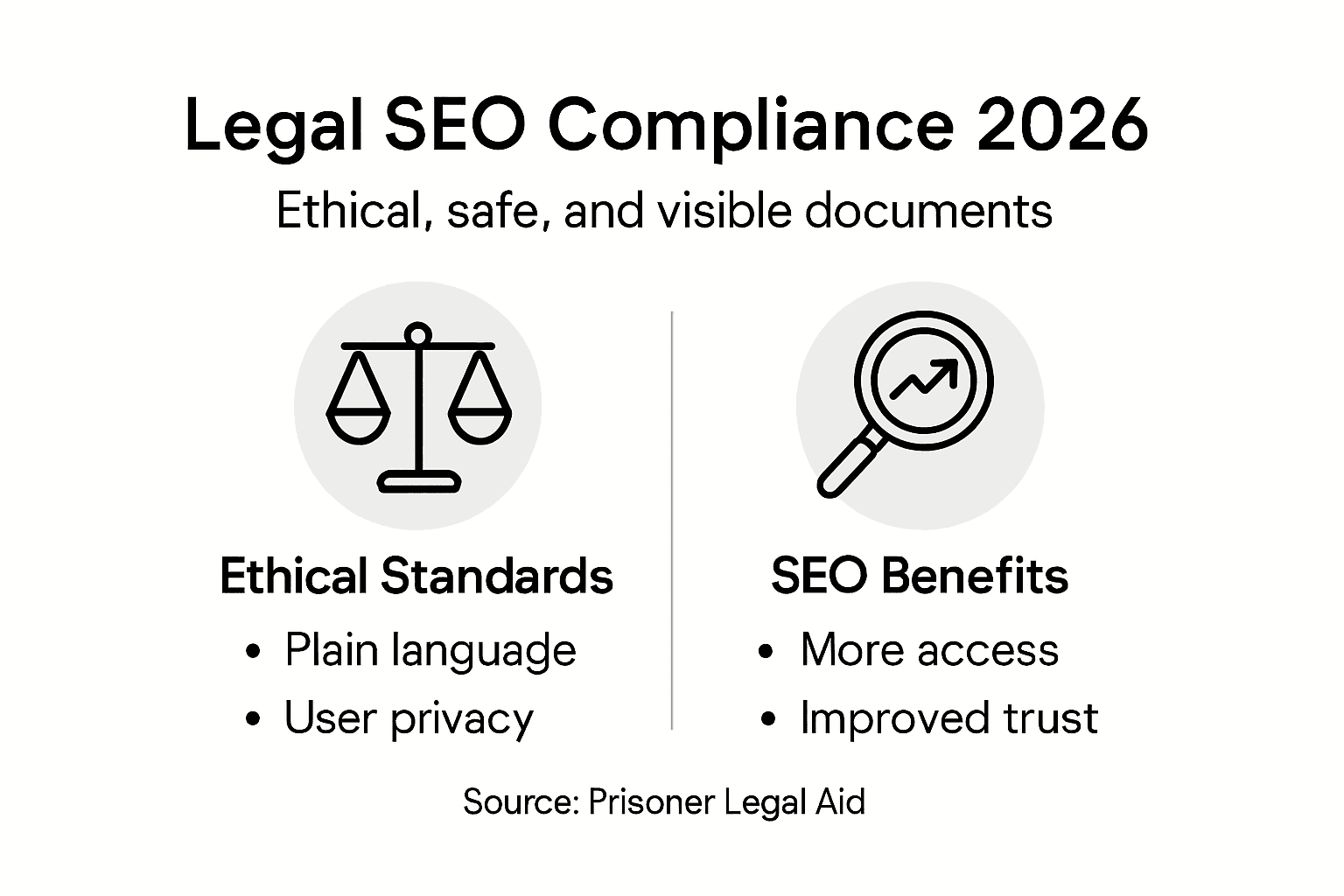
Ethical content creation in legal aid SEO goes beyond traditional marketing strategies. It involves a nuanced understanding of the unique vulnerabilities of individuals seeking legal assistance, ensuring that digital content serves as a supportive, trustworthy resource rather than a potentially exploitative platform.
Key ethical considerations for legal aid content include:
- Confidentiality Protection: Safeguarding sensitive client information in all digital communications
- Non-Discriminatory Language: Using inclusive, respectful terminology that avoids marginalizing any population group
- Accuracy Verification: Ensuring all legal information is current, precise, and contextually appropriate
- Transparent Disclaimers: Clearly communicating the limitations of online resources
- Consent and Privacy: Implementing robust data protection mechanisms
These ethical guidelines are not merely recommendations but critical requirements that directly impact the credibility and effectiveness of legal aid digital services. Content must be crafted with a deep understanding of the potential consequences of misinformation or inappropriate disclosure.
Pro tip: Develop a comprehensive content review process that includes legal professionals and ethics experts to ensure every published resource meets the highest standards of accuracy and client protection.
Avoiding Common SEO Pitfalls in Legal Niches
Navigating the complex digital landscape of legal SEO requires strategic awareness and proactive prevention of common mistakes that can undermine content visibility and credibility. Legal website optimization strategies highlight the critical importance of understanding nuanced digital challenges specific to legal service platforms.
Legal aid websites face unique SEO complexities that extend far beyond traditional digital marketing approaches. The sensitivity of legal content demands a more sophisticated strategy that balances technical optimization with ethical considerations, ensuring that search engine visibility never compromises the integrity of legal information delivery.
Key SEO pitfalls to avoid in legal niches include:
- Keyword Stuffing: Overloading content with legal terminology that reduces readability
- Generic Content Duplication: Creating repetitive materials that fail to provide unique value
- Neglecting Mobile Responsiveness: Ignoring the growing mobile user base seeking legal resources
- Insufficient Local SEO Targeting: Failing to optimize for location-specific legal searches
- Complex Technical Language: Using unnecessarily complicated legal jargon that alienates users
Successful legal SEO strategies require a delicate balance between technical optimization and user-centered content design. The goal is not just to rank higher in search results, but to provide genuinely helpful, accessible information that meets the complex needs of individuals seeking legal guidance.
Pro tip: Conduct regular content audits to ensure your legal resources remain current, accurate, and aligned with both search engine requirements and user comprehension needs.
Elevate Your Legal Document Visibility with Expert Support
The article highlights key challenges faced by underserved communities in navigating the complex digital legal landscape of 2026. Difficulties such as limited access to mobile-optimized resources, understanding legal terminology through voice search, and finding precise, accessible legal aid content are major pain points. At Prisoner Legal Aid, we address these issues directly by providing specialized legal document preparation services tailored specifically for incarcerated and self-represented individuals. Our services ensure your legal documents like habeas corpus petitions and civil rights claims are compliant, clear, and court-ready, bridging the gap between complex legal needs and accessible, trustworthy support.
Take control of your legal challenges today with our affordable and confidential assistance. Visit Prisoner Legal Aid to discover how our streamlined process can help you submit professional legal documents faster and with confidence. For detailed guidance, explore our service descriptions and client testimonials to see the real difference expert preparation can make. Don’t wait until delays or misunderstandings hold back your case. Act now to ensure your legal documents stand out with clarity and compliance.
Frequently Asked Questions
What is semantic search optimization in legal aid services?
Semantic search optimization involves creating content that understands user intent beyond just matching keywords. This means developing legal resources that accurately address the specific questions and needs of users seeking legal assistance.
How can mobile-first indexing improve access to legal aid information?
Mobile-first indexing ensures that legal aid websites are optimized for mobile devices, making them more accessible for users who rely primarily on smartphones to access information, significantly enhancing their ability to find legal resources.
Why is voice search compatibility important for legal aid services?
Voice search compatibility allows legal aid content to be optimized for natural language queries. This helps users, especially those with low literacy or technological skills, find legal assistance by asking questions in a conversational manner.
What are some common pitfalls to avoid in legal SEO for legal aid services?
Common pitfalls include keyword stuffing, creating generic content, neglecting mobile responsiveness, insufficient local SEO targeting, and using complex legal jargon. Avoiding these mistakes can help enhance the visibility and user-friendliness of legal aid content.
Recommended
- Blog – Prisoner Legal Aid
- Prisoner Legal Aid | Federal & Civil Rights Document Preparation
- Prisoner Legal Aid | Federal & Civil Rights Document Preparation
- Prisoner Legal Aid – Professional Legal Document Preparation Services
- HTTPS for Law Firms: Boost Security and Trust
- Complete Guide to Law Firm Marketing SEO: Strategies That Drive Results – Case Quota