Facing daily challenges in a U.S. prison can mean more than just adjusting to routines and rules—it often involves protecting your basic human dignity and constitutional rights. When institutional abuses or unsafe conditions threaten these protections, knowing how to use civil rights litigation becomes your most powerful tool for demanding accountability and change. This guide highlights clear steps for understanding your rights, building a strong claim, and seeking justice even in the toughest circumstances.
Table of Contents
- Defining Civil Rights Litigation In Prisons
- Common Violations Faced By Incarcerated Individuals
- Key Laws And Legal Protections For Prisoners
- Steps In Filing A Civil Rights Claim
- Risks, Costs, And Alternatives To Litigation
Key Takeaways
| Point | Details |
|---|---|
| Civil Rights Litigation Mechanism | Civil rights litigation allows prisoners to challenge constitutional violations and seek remedies for systemic abuses by prison officials. |
| Common Violations | Incarcerated individuals often face severe violations, including inadequate healthcare, discrimination, and unsafe conditions, which undermine their rights. |
| Legal Protections | Key constitutional amendments and federal laws provide protections against cruel punishment and ensure due process for prisoners. |
| Litigation Risks and Alternatives | Pursuing civil rights litigation involves risks such as retaliation and complex procedures; exploring alternative advocacy may yield quicker resolutions. |
Defining Civil Rights Litigation in Prisons
Civil rights litigation in prisons represents a critical legal mechanism for addressing constitutional violations experienced by incarcerated individuals. These legal actions provide a structured pathway for prisoners to challenge systemic abuses, protect fundamental human rights, and seek judicial intervention when institutional misconduct occurs.
At its core, civil rights litigation involves legal claims where prisoners allege that prison officials or institutions have violated their fundamental constitutional protections. Constitutional rights enforcement mechanisms typically focus on addressing violations related to:
- Eighth Amendment protections against cruel and unusual punishment
- First Amendment rights to free expression and religious practice
- Fourteenth Amendment guarantees of due process and equal protection
- Physical safety and protection from deliberate indifference
- Medical care and humane treatment standards
The U.S. Department of Justice Civil Rights Division plays a significant role in this legal landscape, providing federal oversight and enforcement mechanisms. Prison civil rights litigation serves multiple critical functions, acting not just as an individual remedy but also as a systemic accountability tool to identify and address widespread institutional problems.
Prisoners filing these claims must demonstrate specific constitutional violations that go beyond mere disagreements with prison policies. Actionable civil rights claims require clear evidence of intentional misconduct, systemic patterns of abuse, or direct violations of established legal protections.
Pro tip: Document every incident meticulously and seek legal guidance to understand the specific constitutional protections relevant to your specific situation.
Common Violations Faced by Incarcerated Individuals
Incarcerated individuals frequently encounter a complex landscape of potential civil rights violations that fundamentally undermine their constitutional protections. Prison condition violations represent systemic challenges that go far beyond isolated incidents, touching nearly every aspect of institutional life and individual dignity.
The most prevalent civil rights violations experienced by prisoners typically include:
- Denial of adequate medical and mental healthcare
- Physical and sexual abuse by prison staff or other inmates
- Excessive use of force during disciplinary actions
- Deliberate indifference to serious medical conditions
- Discriminatory treatment based on race, gender, or disability
- Restrictions on religious practice and personal expression
- Unsafe and unsanitary living conditions
- Lack of protection from violence within institutional settings
Chronic understaffing and overcrowding frequently contribute to an environment where constitutional violations become normalized. These systemic issues create conditions that make it challenging for incarcerated individuals to maintain basic human dignity and access fundamental rights guaranteed by the U.S. Constitution.

Institutional accountability remains a critical mechanism for addressing these widespread violations. Prisoners must carefully document specific instances of misconduct, gathering evidence that demonstrates a pattern of systemic abuse or intentional disregard for constitutional protections.
Pro tip: Maintain detailed, dated records of every incident and interaction that potentially represents a civil rights violation, as documented evidence is crucial for successful legal claims.
Key Laws and Legal Protections for Prisoners
Prisoners in the United States are afforded a complex network of legal protections designed to safeguard their fundamental constitutional rights. Prisoners’ legal rights represent a critical framework that prevents institutional abuse and ensures basic human dignity within the correctional system.
The primary legal protections for incarcerated individuals stem from several key constitutional amendments and federal statutes:
- Eighth Amendment protections against cruel and unusual punishment
- Fourteenth Amendment guarantees of due process and equal protection
- Civil Rights of Institutionalized Persons Act (CRIPA)
- Americans with Disabilities Act (ADA)
- Prison Litigation Reform Act (PLRA)
- Title VI of the Civil Rights Act
These legal mechanisms establish fundamental rights that prisoners retain even while serving their sentences. The Eighth Amendment, for instance, provides critical protection against excessive force, deliberate medical neglect, and inhumane living conditions. Similarly, the Fourteenth Amendment ensures that prisoners cannot be subjected to discriminatory treatment or arbitrary disciplinary actions without proper legal recourse.
Here’s a quick summary of important legal protections for incarcerated individuals:
| Protection/Law | Core Benefit | Typical Application |
|---|---|---|
| Eighth Amendment | Bans cruel punishment | Prevents excessive force, neglect |
| Fourteenth Amendment | Ensures due process | Stops arbitrary discipline or discrimination |
| ADA | Protects disabled prisoners | Requires access and accommodations |
| PLRA | Regulates prison lawsuits | Limits frivolous or repetitive claims |
Federal oversight plays a crucial role in enforcing these protections. The Department of Justice Civil Rights Division actively investigates systemic violations and can initiate legal actions against institutions that demonstrate consistent patterns of constitutional misconduct. Institutional accountability remains the cornerstone of maintaining prisoners’ fundamental rights and preventing systemic abuses.
Pro tip: Familiarize yourself with the specific legal protections guaranteed by federal statutes, as comprehensive knowledge is your first line of defense against potential rights violations.
Steps in Filing a Civil Rights Claim
Filing a civil rights claim requires careful preparation and understanding of complex legal procedures. Prisoner civil rights litigation involves navigating intricate judicial processes that demand precision and thorough documentation.
Before initiating a civil rights claim, prisoners must address several critical preliminary requirements:
- Exhaust administrative remedies within the correctional institution
- Gather comprehensive documentation of the alleged violation
- Identify specific defendants and their roles
- Collect evidence supporting the constitutional rights violation
- Understand the statute of limitations for your specific claim
- Prepare a clear and concise narrative of the incident
The core components of a successful civil rights claim typically involve demonstrating three fundamental elements: a constitutional right was violated, the violation was committed by someone acting under color of state law, and the violation caused demonstrable harm or injury. Prisoners must provide specific, factual details that clearly outline how their constitutional protections were compromised.
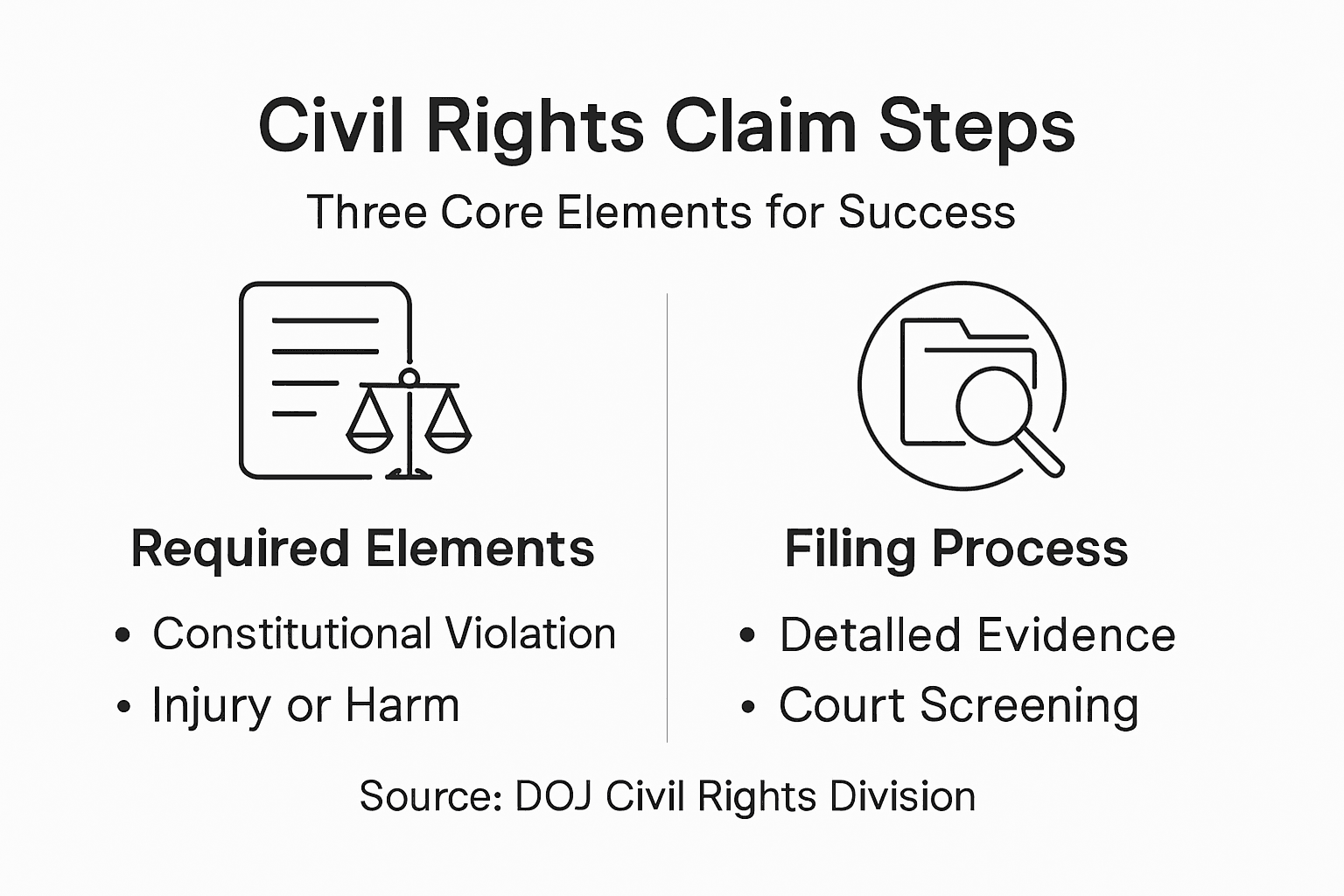
Procedural complexity makes civil rights litigation challenging. Courts impose strict screening processes that require inmates to present well-documented claims with substantive evidence. Inmates must be prepared to overcome potential procedural barriers, including limitations imposed by the Prison Litigation Reform Act, which can restrict frivolous or repetitive claims.
Pro tip: Meticulously document every aspect of your claim, including dates, specific incidents, and potential witnesses to strengthen your legal argument.
Risks, Costs, and Alternatives to Litigation
Civil rights litigation presents complex challenges for incarcerated individuals, with potential risks that extend far beyond monetary considerations. Prison litigation dynamics reveal a nuanced landscape of potential outcomes and systemic constraints.
Key risks and potential costs of pursuing civil rights litigation include:
- Potential retaliation from institutional staff
- Financial expenses associated with legal processes
- Emotional and psychological stress of prolonged legal battles
- Risk of having claims dismissed under procedural grounds
- Potential negative impact on institutional relationships
- Time-consuming documentation and legal preparation
The Prison Litigation Reform Act has significantly transformed the litigation landscape, imposing substantial barriers that discourage many legitimate claims. These procedural hurdles require inmates to navigate complex legal requirements, often limiting their ability to effectively challenge institutional misconduct.
Beyond traditional litigation, alternative strategies for addressing institutional violations can provide more immediate and sustainable pathways to justice. These alternatives might include administrative advocacy, engaging external oversight organizations, pursuing media attention, or collaborating with prisoner rights advocacy groups to generate systemic pressure for institutional change.
The following table compares traditional litigation and alternative advocacy approaches for inmates:
| Approach | Process Speed | Risk Level | Potential Outcome |
|---|---|---|---|
| Litigation | Slow, formal court review | High (retaliation, costs) | Court orders, policy change |
| Advocacy (oversight/media/groups) | Faster, informal actions | Lower personal risk | Institutional reform, public awareness |
Pro tip: Carefully evaluate the potential risks and benefits of litigation, considering alternative strategies that might more effectively address your specific institutional challenges.
Get the Legal Support You Need to Challenge Prison Civil Rights Violations
Filing a civil rights claim in prison can feel overwhelming given the complex legal procedures and strict requirements described in the article. You may be facing deliberate indifference, denial of medical care, or abuse but struggle with gathering evidence or navigating the legal system. At Prisoner Legal Aid, we understand how critical it is to prepare accurate and court-ready documents that clearly demonstrate constitutional violations and meet procedural standards.

Take control of your case today with professional assistance tailored to incarcerated individuals. Our specialized document preparation services help draft, format, and submit civil rights claims and other legal filings efficiently to maximize your chances of success. Visit Prisoner Legal Aid to learn more and start the process now. Don’t wait until procedural hurdles or missed deadlines derail your path to justice. Empower yourself with expert help designed specifically for people fighting for their basic rights behind bars.
Frequently Asked Questions
What is civil rights litigation in prisons?
Civil rights litigation in prisons refers to legal actions taken by incarcerated individuals to challenge violations of their constitutional rights by prison officials or institutions. It provides a way for prisoners to seek justice and accountability for abuses such as cruel and unusual punishment, due process violations, and discriminatory treatment.
What types of civil rights violations do prisoners commonly face?
Prisoners often face various civil rights violations including denial of adequate medical care, physical and sexual abuse, excessive use of force, deliberate indifference to serious medical conditions, and unsafe living conditions. These issues can severely undermine their constitutional protections and human dignity.
What legal protections do prisoners have against civil rights violations?
Prisoners are protected under several key legal frameworks including the Eighth Amendment, which forbids cruel and unusual punishment, and the Fourteenth Amendment, which guarantees due process and equal protection. Other important laws include the Civil Rights of Institutionalized Persons Act (CRIPA) and the Americans with Disabilities Act (ADA).
What steps should a prisoner take to file a civil rights claim?
To file a civil rights claim, a prisoner must first exhaust administrative remedies within the institution, then gather comprehensive documentation of the alleged violation, identify specific defendants, and prepare a clear narrative of the incident. It’s critical to demonstrate that a constitutional right was violated and to provide evidence supporting the claim.
Recommended
- Prisoner Legal Aid – Professional Legal Document Preparation Services
- Prisoner Legal Aid | Federal & Civil Rights Document Preparation
- Prisoner Legal Aid | Federal & Civil Rights Document Preparation
- Blog – Prisoner Legal Aid
- Day 125: A Look at Unlawful Imprisonment Laws in Arizona » Tamou Law Group