
Standing up for your civil rights in a correctional facility can feel nearly impossible when met with complicated rules and institutional resistance. For many incarcerated people and those representing themselves, civil rights litigation offers a legal path to challenge unfair treatment and demand accountability. This guide explains how challenging prison conditions through federal and state courts works, outlining key laws, common claims, and the steps needed to build a strong case for justice.
Table of Contents
- What Civil Rights Litigation Involves
- Types of Claims in Prisoner Lawsuits
- Key Laws and Legal Requirements
- Steps in Filing a Civil Rights Case
- Risks, Challenges, and Available Remedies
Key Takeaways
| Point | Details |
|---|---|
| Civil Rights Litigation Protects Constitutional Rights | This legal mechanism allows individuals to challenge systemic discrimination and pursue social change through the courts. |
| Prisoner Lawsuits Address Unconstitutional Treatment | Inmates can file claims regarding cruel punishment, inadequate care, and due process violations, among other rights issues. |
| Legal Requirements and Procedural Hurdles | The Prison Litigation Reform Act mandates exhaustive internal grievance processes and imposes strict filing criteria for prisoner lawsuits. |
| Success Can Lead to Significant Reforms | Successful claims may result in monetary compensation, policy changes, and greater accountability for rights violations. |
What Civil Rights Litigation Involves
Civil rights litigation is a powerful legal mechanism designed to protect and enforce constitutional rights for individuals experiencing systemic discrimination or rights violations. These judicial actions provide marginalized communities a critical pathway to challenge unjust policies and seek meaningful social change.
This complex legal process involves filing legal claims in federal or state courts that address violations of fundamental rights guaranteed by the Constitution and various federal statutes. Key areas of focus include:
- Employment discrimination
- Voting rights violations
- Police misconduct
- Housing discrimination
- Educational access inequality
- Disability rights challenges
Civil rights litigation typically requires filing actions in federal court utilizing specific legal frameworks like the Civil Rights Act, Americans with Disabilities Act (ADA), or Section 1983. These legal strategies aim to challenge systemic barriers and address institutional practices that infringe upon individual freedoms.
The primary objective of civil rights litigation extends beyond individual remedies, seeking broader societal transformation by exposing discriminatory practices and establishing legal precedents that protect marginalized populations. Successful cases can result in policy changes, institutional reforms, and increased accountability for systemic rights violations.
Civil rights litigation serves as a critical mechanism for defending individual liberties and promoting social justice through legal intervention.
Pro tip: Document every instance of potential rights violation meticulously, as detailed records can significantly strengthen future legal claims.
Types of Claims in Prisoner Lawsuits
Prisoner lawsuits represent critical legal mechanisms for challenging unconstitutional treatment and systemic rights violations within correctional environments. Inmates can pursue various types of legal claims addressing fundamental constitutional protections and institutional misconduct.
The most common types of prisoner lawsuits encompass several key constitutional and civil rights violations:
- Cruel and unusual punishment
- Excessive use of force by prison staff
- Inadequate medical care
- Failure to protect from inmate violence
- Discriminatory treatment
- Retaliation for filing grievances
- Denial of due process
- Restrictions on religious practices
- Limited access to courts
Legal claims are typically pursued under specific federal statutes, with 42 U.S.C. § 1983 being a primary mechanism for addressing constitutional violations by state actors. These claims require demonstrating that prison officials or staff members deliberately violated an individual’s constitutional rights through action or deliberate indifference.
The Prison Litigation Reform Act (PLRA) significantly impacts these legal actions by imposing strict procedural requirements. Inmates must exhaust all administrative remedies before filing federal lawsuits, which means completely addressing grievances through internal prison complaint systems before seeking judicial intervention.
Successful prisoner lawsuits can result in meaningful institutional reforms, monetary compensation, and increased accountability for systemic rights violations.
Pro tip: Carefully document every incident of potential rights violation with precise dates, witnesses, and specific details to strengthen your legal claim.
Key Laws and Legal Requirements
Prisoners retain fundamental constitutional protections despite their incarcerated status, with several critical federal laws safeguarding their civil rights. Key statutes protect institutionalized persons through comprehensive legal frameworks designed to prevent systemic rights violations and ensure humane treatment.
The most significant legal protections for prisoners include:
- Civil Rights of Institutionalized Persons Act (CRIPA)
- Eighth Amendment prohibitions on cruel and unusual punishment
- Fourteenth Amendment equal protection guarantees
- Americans with Disabilities Act (ADA)
- Prison Litigation Reform Act (PLRA)
- Violent Crime Control and Law Enforcement Act
Constitutional protections form the foundational basis for prisoner rights, with specific legal requirements governing incarceration conditions and institutional conduct. These laws mandate fundamental rights such as due process in disciplinary hearings, religious freedom, and protection from discriminatory treatment.
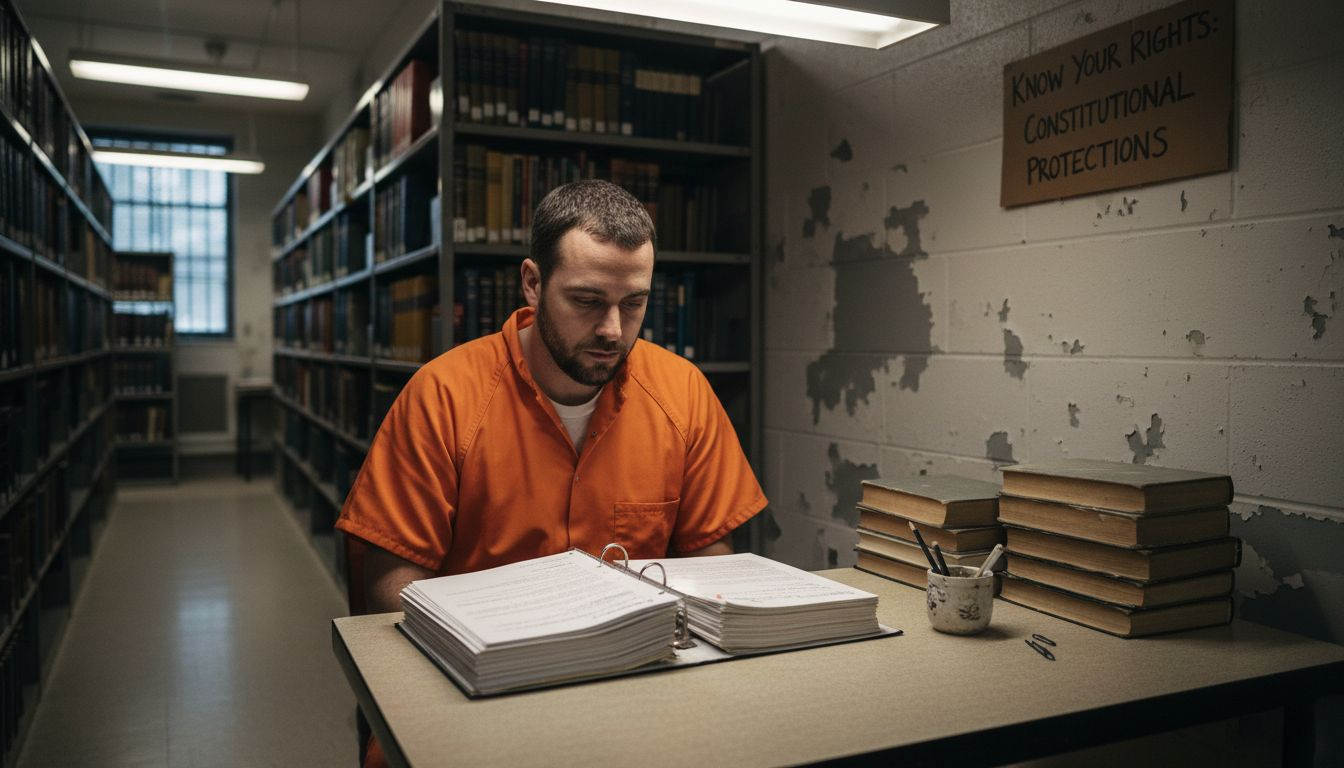
The Prison Litigation Reform Act significantly impacts prisoners’ ability to file lawsuits by imposing strict procedural requirements. Inmates must exhaust all internal administrative remedies before pursuing federal litigation, and the act limits frivolous claims while establishing stringent standards for filing legal actions against correctional institutions.
Here’s a summary of major federal statutes and their impact on prisoner rights:
| Statute Name | Main Protection | Typical Impact on Prisoners |
|---|---|---|
| CRIPA | Safeguards humane treatment | Enables investigations of prisons |
| ADA | Guarantees disability access | Requires reasonable accommodations |
| PLRA | Limits frivolous lawsuits | Raises filing barriers for inmates |
| Violent Crime Control Act | Regulates law enforcement conduct | Sets standards on use of force |
Prisoners maintain core constitutional rights, though judicial interpretation often provides significant deference to institutional management and security concerns.
Pro tip: Carefully research and understand the specific legal provisions that apply to your specific situation before initiating any legal action.
Steps in Filing a Civil Rights Case
Filing a civil rights lawsuit requires careful preparation and adherence to complex procedural requirements. Prisoners must navigate multiple legal steps to ensure their legal claims receive proper judicial consideration.
The initial stages of filing a civil rights case involve several critical components:
- Exhausting all internal prison administrative grievance procedures
- Documenting specific constitutional rights violations
- Identifying all potential defendants
- Gathering supporting evidence and documentation
- Preparing a comprehensive legal complaint
- Completing required court filing forms
- Submitting filing fees or indigency applications
Preliminary requirements are crucial, with prisoners required to complete specific court documentation before their case can proceed. This typically involves preparing a detailed civil rights complaint that precisely outlines the constitutional violations, specifies the involved parties, and provides a clear narrative of the incidents.
The court will conduct an initial screening of the complaint to determine legal sufficiency. Inmates must demonstrate they have exhausted all available administrative remedies within the prison system before filing, which means completing all internal grievance procedures and waiting for official responses. This requirement is designed to give correctional institutions an opportunity to address issues internally before judicial intervention.
Successfully navigating the legal filing process requires meticulous attention to procedural details and comprehensive documentation of rights violations.
Pro tip: Maintain a comprehensive, chronological record of all incidents and institutional responses to strengthen the credibility of your civil rights claim.
Risks, Challenges, and Available Remedies
Prisoners pursuing civil rights litigation face significant procedural and legal obstacles designed to limit their access to judicial review. The Prison Litigation Reform Act (PLRA) imposes substantial barriers that dramatically complicate the process of seeking legal redress for institutional misconduct.
Key challenges in civil rights litigation include:
- Mandatory exhaustion of administrative grievance procedures
- Strict filing fee requirements
- Limited damages and compensation
- Three-strikes filing restrictions
- High legal standards for proving constitutional violations
- Limited attorney representation
- Judicial deference to prison administration
Legal constraints create substantial hurdles for inmates, with courts often implementing restrictive interpretations that discourage comprehensive judicial oversight of prison conditions. The PLRA’s provisions effectively limit prisoners’ ability to challenge institutional practices by imposing complex procedural requirements that can result in case dismissal for technical non-compliance.
Despite these significant challenges, available remedies for successful civil rights claims may include monetary damages, injunctive relief, and potential institutional reforms. However, prisoners must demonstrate clear constitutional violations and navigate an intentionally complex legal landscape that frequently favors institutional interests over individual rights.
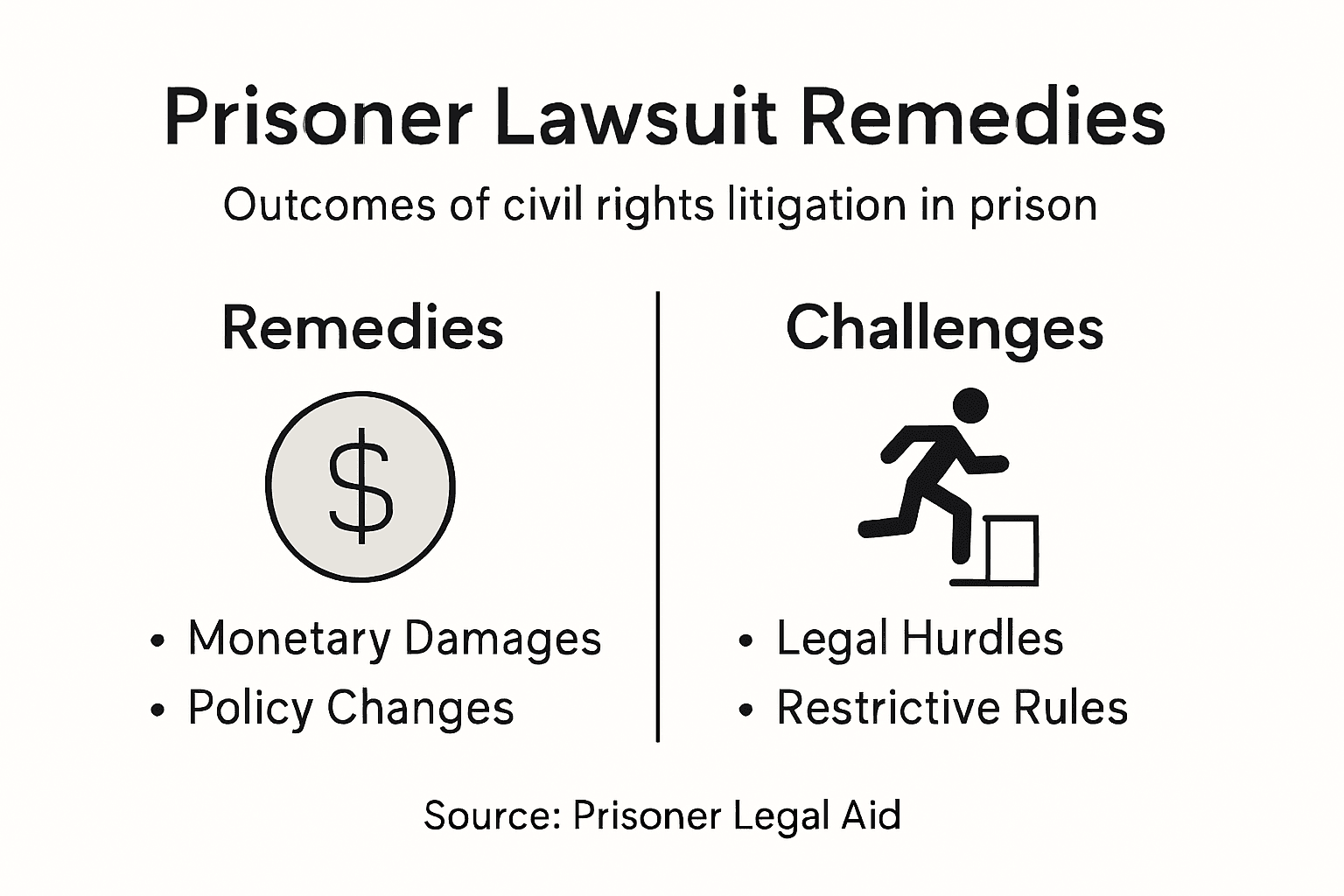
This table compares typical remedies available if a civil rights claim succeeds:
| Remedy | Description | Typical Result |
|---|---|---|
| Monetary Damages | Compensation awarded to plaintiff | Payment for harm or loss |
| Injunctive Relief | Court order for institutional change | Policy reforms or new practices |
| Institutional Reform | Structural changes in prison or agency | Improved conditions, new oversight |
| Accountability Measures | Penalties for officials or staff | Disciplinary action or retraining |
Successful civil rights litigation requires extraordinary persistence, meticulousness, and a comprehensive understanding of legal procedural requirements.
Pro tip: Carefully document every interaction and maintain a comprehensive, chronological record of potential rights violations to strengthen your legal arguments.
Navigate Civil Rights Litigation with Expert Document Assistance
Civil rights litigation is a crucial yet complex path to justice for prisoners facing constitutional violations like cruel and unusual punishment or inadequate medical care. Understanding the detailed procedures, exhausting administrative remedies, and crafting legally compliant complaints can feel overwhelming. If you need to prepare precise civil rights claims or other legal documents with confidence, professional assistance can make the difference between having your case heard or dismissed.

At Prisoner Legal Aid, we specialize in helping incarcerated and self-represented individuals draft and format legal documents for federal and state court filings. Our services ensure that your civil rights complaints meet all procedural requirements, giving your case the strongest possible foundation. Whether you need help with habeas corpus petitions or complex civil rights claims, our affordable and confidential support is designed to simplify the filing process so you can focus on pursuing justice. Take the next step toward protecting your rights by visiting Prisoner Legal Aid for expert document preparation and guidance.
Frequently Asked Questions
What is civil rights litigation in prison?
Civil rights litigation in prison involves legal actions taken by inmates to challenge violations of their constitutional rights. These claims may address issues like cruel and unusual punishment, inadequate medical care, police misconduct, and discrimination.
What are the common types of claims in prisoner lawsuits?
Common claims in prisoner lawsuits include cruel and unusual punishment, excessive force by staff, inadequate medical care, failure to protect from violence, and retaliation for filing grievances, among others.
What are the steps to filing a civil rights case as a prisoner?
Filing a civil rights case involves several steps, including exhausting internal administrative grievances, documenting rights violations, identifying defendants, gathering evidence, preparing a legal complaint, and submitting court forms with any necessary filing fees.
What are the challenges faced in civil rights litigation for prisoners?
Challenges include mandatory exhaustion of administrative procedures, filing fee requirements, limited damages, strict legal standards for proving violations, and judicial deference to prison management, which can complicate the pursuit of legal redress.
Recommended
- Blog – Prisoner Legal Aid
- Prisoner Legal Aid – Professional Legal Document Preparation Services
- Prisoner Legal Aid | Federal & Civil Rights Document Preparation
- Prisoner Legal Aid | Federal & Civil Rights Document Preparation
- 7 Essential Civil Litigation Best Practices for Success | Ali Legal
- Could I get Fired for Being a Whistleblower? | Serendib Law Firm