
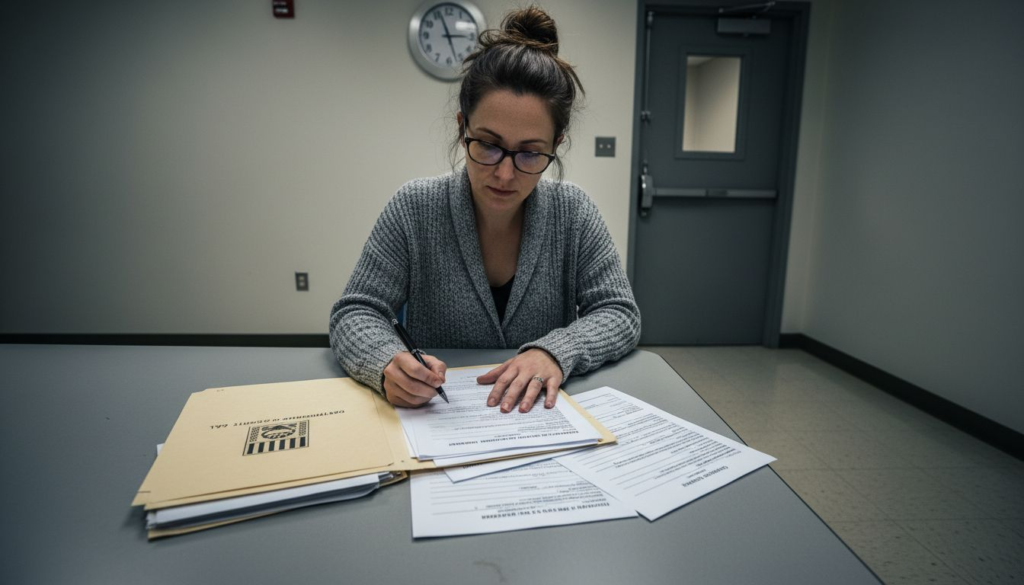
Facing a federal or state court without an attorney can feel overwhelming, especially when gathering the pieces needed for a strong legal submission. The process begins with systematic information collection, a step that both the United Nations and Prison Policy Initiative identify as essential for protecting your rights and moving your case forward. This overview breaks down exactly how to compile your information, choose the right forms, and prepare your documents so your efforts have the greatest impact.
Table of Contents
- Step 1: Gather Required Legal And Personal Information
- Step 2: Select Proper Legal Documents And Forms
- Step 3: Draft And Format Documents For Court Compliance
- Step 4: Review And Verify Accuracy Of All Documents
- Step 5: Submit Documents Following Court Procedures
Quick Summary
| Key Message | Explanation |
|---|---|
| 1. Gather all necessary information | Compile comprehensive personal and case-related details, including legal names, case numbers, and relevant dates, to support your submission. |
| 2. Choose the correct legal forms | Identify specific legal documents tailored to your situation to avoid delays in your legal proceedings. |
| 3. Format documents according to court rules | Adhere to strict formatting requirements like font size and margin settings to ensure documents are accepted. |
| 4. Verify accuracy before submission | Meticulously check for errors in facts, spelling, and citations to maintain the credibility of your documents. |
| 5. Follow precise submission procedures | Understand and comply with electronic filing requirements and deadlines to ensure successful document processing. |
Step 1: Gather required legal and personal information
Successfully preparing legal documents requires systematic information collection. Your goal is to compile comprehensive personal and case-related details that will form the foundation of your legal submission.
While gathering information seems straightforward, incarcerated individuals often face unique challenges in accessing and organizing their records. Legal assistance organizations recommend a methodical approach to documenting your case details. Start by creating a comprehensive personal information portfolio that includes:
- Full legal name and any previous legal names
- Inmate identification number
- Current correctional facility details
- Personal contact information, including family or legal representatives
- Relevant court case numbers
- Key dates related to your legal proceedings
Thorough documentation can significantly improve the quality and credibility of your legal documents.
Prioritize obtaining official records like court transcripts, previous legal correspondence, and personal identification documents. The United Nations guidelines on legal aid emphasize the importance of accurate personal information in protecting individual rights.
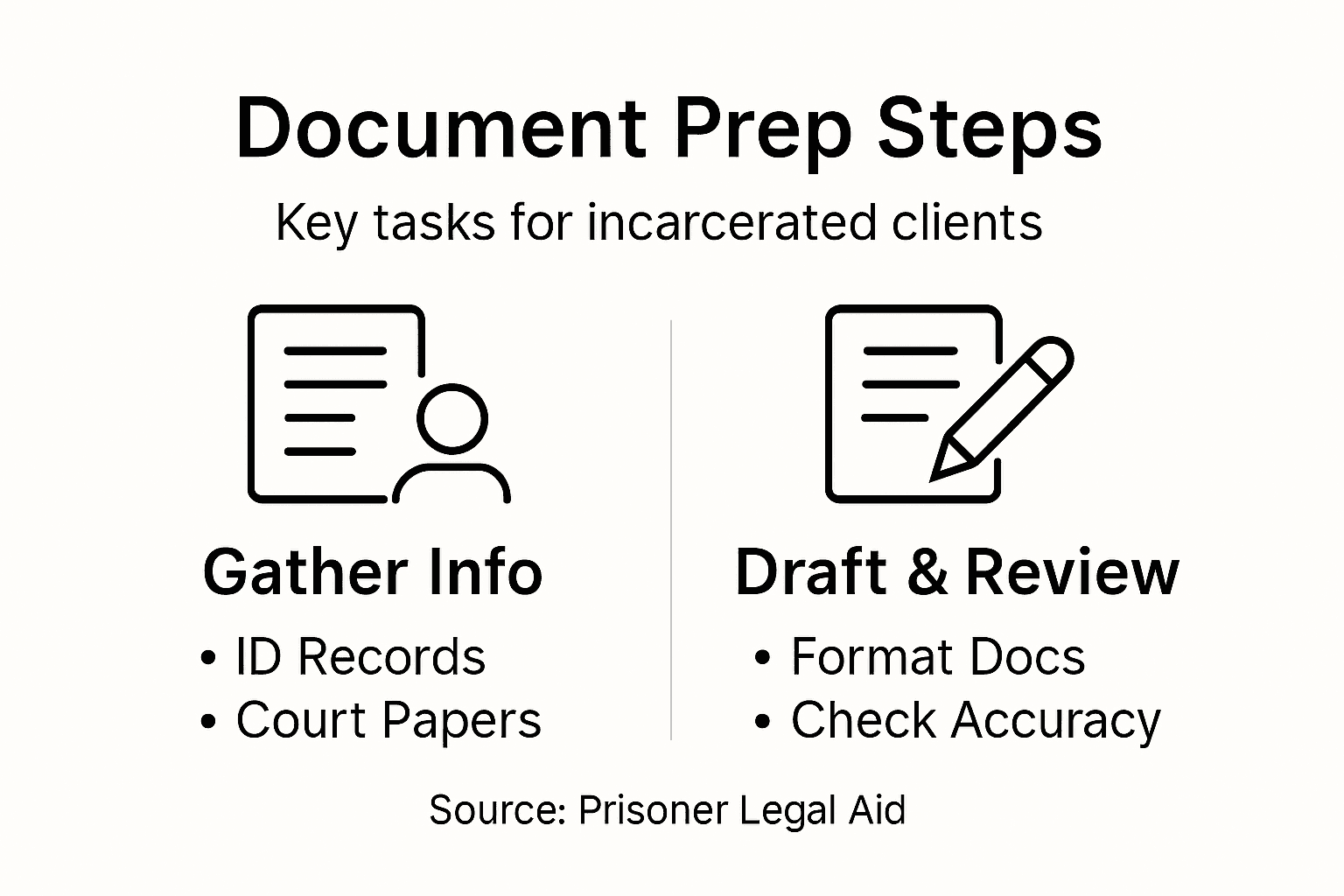
Pro tip: Request copies of your institutional records early, as processing can take several weeks and may require multiple formal requests.
Step 2: Select proper legal documents and forms
Navigating the complex world of legal documentation requires strategic selection and careful preparation. Your objective is to identify and compile the precise legal forms that align with your specific legal situation and court requirements.
Successful document preparation begins with understanding the legal resources available for incarcerated individuals. Different legal actions demand specific forms, so you’ll need to categorize your legal needs carefully. Some key document types include:
- Habeas corpus petitions
- Civil rights complaint forms
- Federal tort claims
- Appeals and post-conviction relief applications
- Prisoner litigation documents
- Administrative grievance forms
Selecting the incorrect legal form can significantly delay your legal proceedings and potentially compromise your case.
Careful research is critical when identifying appropriate legal documents. The United Nations legal aid guidelines emphasize the importance of precise document selection to protect individual rights. Consider consulting legal reference materials, institutional law libraries, or professional document preparation services to ensure accuracy.

Pro tip: Request multiple copies of each form and always maintain a backup set of your completed documents in a secure location.
Step 3: Draft and format documents for court compliance
Crafting legally acceptable documents requires precision and attention to detail. Your goal is to create court-ready submissions that meet strict formatting and procedural standards.
Understanding legal document formatting rules is crucial for ensuring your documents are not rejected. Each court has specific requirements that can make or break your submission. Key formatting considerations include:
- Consistent font selection (typically Times New Roman, 12-point)
- Proper margin settings (usually 1-inch margins on all sides)
- Double-spaced text
- Numbered page references
- Clear section headings
- Precise citation formats
Even minor formatting errors can result in immediate document rejection, potentially derailing your legal process.
Careful document preparation involves more than just visual formatting. Civil litigation guidelines emphasize the importance of substantive accuracy alongside technical compliance. Consider consulting legal reference materials or professional document preparation services to ensure your submissions meet all procedural requirements.
Pro tip: Create a detailed checklist of court-specific formatting requirements and cross-reference it multiple times before submission.
Step 4: Review and verify accuracy of all documents
Careful document verification is your final critical checkpoint before submission. Your objective is to meticulously examine every detail of your legal documents to eliminate potential errors that could compromise your case.
Research standards for document accuracy emphasize the importance of precision in legal documentation. A comprehensive review should systematically check multiple aspects of your documents:
- Factual statement verification
- Correct spelling and grammar
- Precise legal citations
- Personal information accuracy
- Compliance with court formatting requirements
- Consistent terminology
One single overlooked error can potentially derail your entire legal submission.
Beyond technical accuracy, ethical documentation practices highlight the critical need for protecting vulnerable individuals through meticulous document preparation. This means not just checking for grammatical errors but ensuring every statement is truthful, relevant, and properly substantiated.
Pro tip: Create a separate checklist and review your documents at least three different times, preferably with breaks between review sessions to maintain fresh perspective.
Step 5: Submit documents following court procedures
Successfully submitting legal documents requires understanding and precisely following complex court filing protocols. Your objective is to ensure your documents are processed correctly and meet all jurisdictional requirements.
Electronic filing procedures have transformed document submission processes, introducing specific technical and procedural standards. Courts now expect submissions that adhere to strict guidelines:
- PDF document formatting
- Electronic registration requirements
- Precise submission deadlines
- Proper digital file naming conventions
- Accurate case identification numbers
- Compliance with court-specific electronic systems
One procedural misstep can result in immediate document rejection, potentially derailing your entire legal effort.
Careful preparation goes beyond technical compliance. Civil litigation submission guidelines emphasize the importance of exhausting administrative remedies and ensuring comprehensive documentation before submission. Verify every detail meticulously to maximize your chances of successful processing.
Pro tip: Maintain digital and physical copies of all submitted documents, including confirmation receipts and submission timestamps, to create a comprehensive record of your filing.
For quick reference, here’s a table highlighting recommended resources and their main uses:
| Resource | Purpose | How It Helps |
|---|---|---|
| Legal Assistance Orgs | Info collection support | Clarify what documents are needed |
| UN Legal Aid Guidelines | Rights protection guidance | Outline best practice requirements |
| Institutional Law Libraries | Legal form research | Find and understand forms |
| Electronic Filing Systems | Submission of documents | Ensure protocol is followed |
Here’s a summary comparing key steps and their main objectives and challenges:
| Step | Primary Objective | Common Challenge |
|---|---|---|
| Gather Info | Compile all personal and legal details | Accessing official records |
| Select Documents | Choose correct legal forms | Identifying the precise form |
| Draft & Format | Meet court requirements | Ensuring formatting compliance |
| Review & Verify | Eliminate errors and inaccuracies | Overlooking minor mistakes |
| Submit | Follow court protocols exactly | Missing a procedural detail |
Take Control of Your Legal Document Preparation Today
Preparing legal documents while incarcerated is a complicated and often overwhelming challenge. The article outlines critical pain points such as gathering official records, selecting the correct legal forms, ensuring strict court formatting, and avoiding costly errors that can delay or derail your case. You deserve professional support to overcome these obstacles and confidently submit court-ready documents like habeas corpus petitions or civil rights claims.
At Prisoner Legal Aid, we specialize in helping incarcerated individuals navigate each complex step with precision and care. Our services focus on drafting, formatting, and reviewing your documents to ensure full compliance with federal and state court requirements. We understand the emotional stress of managing these tasks alone, and our team is committed to providing affordable, confidential, and timely assistance tailored to your unique situation.
Do not let minor mistakes hold your legal efforts back. Visit Prisoner Legal Aid now to access expert document preparation services and detailed guides that empower you to take action immediately. Learn more about how we assist with habeas corpus petitions and appeals and explore our streamlined service process designed for clients with limited legal resources. Your case deserves the highest chance of success—start your journey with professional help today.
Frequently Asked Questions
What personal information do I need to gather for preparing legal documents?
To successfully prepare legal documents, gather your full legal name, inmate identification number, current correctional facility details, and relevant court case numbers. Create a comprehensive portfolio that includes personal contact information and key dates related to your legal proceedings.
How can I select the proper legal documents for my case?
Identify your specific legal needs by categorizing the type of action you are pursuing, such as habeas corpus petitions or civil rights complaints. Review the key document types relevant to your situation and ensure you have the correct forms before proceeding with your submission.
What formatting rules do I need to follow when drafting legal documents?
When drafting documents, use a consistent font, typically Times New Roman 12-point, and maintain 1-inch margins on all sides. Ensure your text is double-spaced, includes numbered page references, and follows specific citation formats to comply with court requirements.
How do I verify the accuracy of my legal documents before submission?
Carefully review each document for factual accuracy, spelling, and proper legal citations. Systematically check for compliance with court formatting requirements and ensure the terminology is consistent to avoid potential issues during submission.
What steps should I take to submit my legal documents correctly?
Follow the specific court filing protocols, which may include electronic submission or adhering to precise deadlines. Ensure all documents are formatted as requested and maintain copies of submitted documents along with confirmation receipts to track your filing status.
How can I ensure my documents are not rejected during the submission process?
To minimize the chance of rejection, meticulously meet all procedural guidelines for your jurisdiction, such as proper file naming conventions and case identification numbers. Create a checklist to ensure you review every detail before submitting your documents.
Recommended
- Prisoner Legal Aid – Professional Legal Document Preparation Services
- Prisoner Legal Aid | Federal & Civil Rights Document Preparation
- Prisoner Legal Aid | Federal & Civil Rights Document Preparation
- Blog – Prisoner Legal Aid
- Trial Presentation Setup Guide for Seamless Courtroom Success
- Legal Consultation Preparation Guide for Successful Outcomes | Ali Legal