

Facing a criminal case without money for a lawyer can feel overwhelming. In the United States, indigent representation guarantees a court-appointed attorney for those who truly cannot afford one, protecting your right to fair treatment in the legal system. This right, rooted in the landmark Supreme Court decision Gideon v. Wainwright, means your financial situation should never block you from critical legal help. Understanding how indigent representation works, including eligibility and the types of defense systems, helps you advocate for your rights and prepare important court documents confidently.
Table of Contents
- Defining Indigent Representation in U.S. Courts
- Types of Indigent Defense Systems Explained
- Eligibility Requirements for Indigent Status
- Legal Foundations and Constitutional Rights
- Risks, Limitations, and Common Pitfalls
Key Takeaways
| Point | Details |
|---|---|
| Indigent Representation is a Constitutional Right | Individuals who cannot afford legal counsel are entitled to court-appointed attorneys, ensuring access to justice. |
| Types of Indigent Defense Systems Vary | Different jurisdictions employ various models such as public defender offices and assigned counsel systems, affecting the quality of legal representation. |
| Eligibility Assessment is Multifaceted | Determining indigency involves comprehensive evaluations of financial circumstances beyond just income levels. |
| Structural Challenges Exist | The indigent defense system often faces underfunding and high caseloads, which may compromise the effectiveness of legal representation. |
Defining Indigent Representation in U.S. Courts
In the United States legal system, indigent representation refers to the constitutional right of individuals who cannot afford legal counsel to receive court-appointed attorneys. This fundamental legal protection ensures that financial limitations do not prevent defendants from accessing justice.
The concept of indigent representation stems from the landmark Supreme Court decision in Gideon v. Wainwright, which established that criminal defendants have the right to legal representation regardless of their economic status. This groundbreaking ruling fundamentally transformed the American judicial landscape by guaranteeing legal support for those who cannot afford private attorneys.
Key characteristics of indigent representation include:
- Financial qualification based on demonstrable inability to pay legal fees
- Appointment of counsel in criminal proceedings, particularly for serious charges
- Flexible determination of financial status by trial judges
- Protection of constitutional rights for economically disadvantaged individuals
The process of determining indigency involves a comprehensive assessment of an individual’s financial circumstances. Courts evaluate available funds, assets, expenses, and personal obligations to decide whether a defendant qualifies for court-appointed representation. This nuanced approach ensures that legal support is provided to those who genuinely cannot afford an attorney.
Pro tip: If you believe you qualify for indigent representation, document your financial circumstances thoroughly and be prepared to provide detailed evidence of your economic situation to the court.
Types of Indigent Defense Systems Explained
The United States legal system employs multiple indigent defense models to provide legal representation for defendants who cannot afford private attorneys. These systems vary significantly across different jurisdictions, creating a complex landscape of legal support for economically disadvantaged individuals.
Public defender organizations and court-appointed private attorneys represent the two primary modes of indigent defense delivery. Each system has unique characteristics, advantages, and potential limitations in serving clients who require legal representation.

Three primary types of indigent defense systems include:
Here’s a side-by-side look at major indigent defense system types and their unique attributes:
| System Type | Attorney Source | Caseload Structure | Typical Benefits |
|---|---|---|---|
| Public Defender Office | Government-employed staff | Managed by dedicated office | Consistent quality, structured support |
| Assigned Counsel System | Appointed private lawyers | Varies by individual case | Personalized attention, case-by-case |
| Contract Attorney Model | Private firms under contract | Pre-set annual or case limits | Budget predictability, volume handled |
- Public Defender Offices: Salaried government attorneys specializing in representing indigent clients
- Assigned Counsel Systems: Private attorneys appointed by courts to handle individual cases
- Contract Attorney Systems: Law firms or individual lawyers contracted by local governments to handle a specific volume of indigent defense cases
Public defender systems tend to provide more consistent and comprehensive legal representation compared to other indigent defense models.
The fragmented nature of indigent defense delivery means that each jurisdiction can implement its own approach. This variability can lead to significant differences in the quality and effectiveness of legal representation across different regions of the United States.
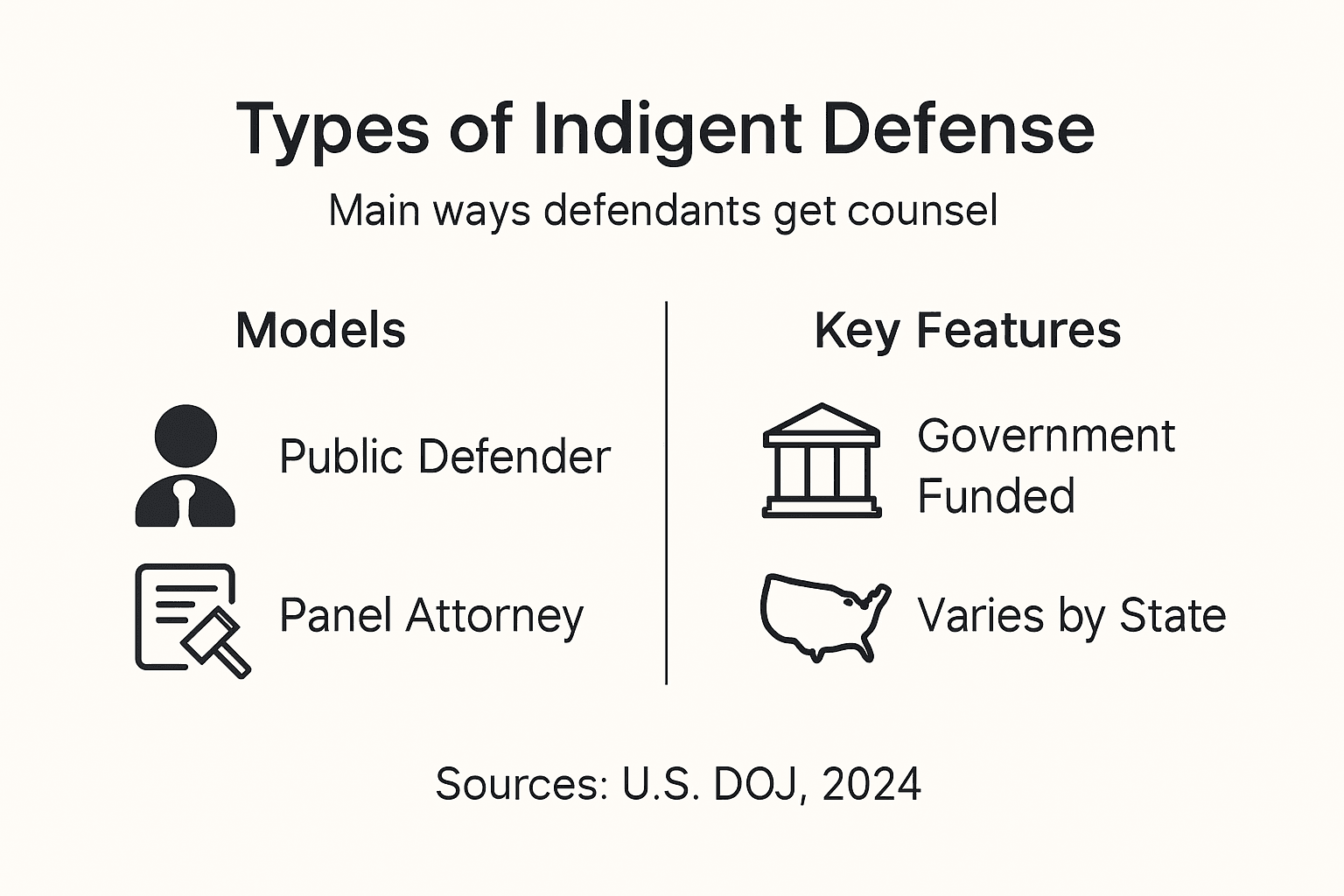
Research suggests that public defender systems often produce more favorable outcomes for defendants. These organizations typically have structured training, consistent caseloads, and institutional support that can lead to better legal strategies and reduced likelihood of excessive sentencing.
Pro tip: If you are seeking indigent representation, research the specific indigent defense system used in your local jurisdiction to understand how your legal support will be structured.
Eligibility Requirements for Indigent Status
Determining indigent status involves a comprehensive financial assessment that goes far beyond simple income measurements. Courts carefully evaluate an individual’s economic circumstances to ensure legal representation is provided to those who genuinely cannot afford an attorney.
Eligibility criteria for indigent representation encompass multiple financial and contextual factors that vary across different jurisdictions. The fundamental goal is to identify defendants who lack sufficient resources to secure effective legal defense.
Key considerations for determining indigent eligibility typically include:
- Total household income relative to federal poverty guidelines
- Existing assets and financial resources
- Number of dependents and financial obligations
- Anticipated legal expenses for the specific case
- Potential support from family or other sources
Courts recognize that financial inability to afford legal representation is not solely about current income, but a holistic assessment of economic capacity.
Indigency determinations occur at multiple stages of legal proceedings, allowing for flexible evaluation of a defendant’s financial situation. Some jurisdictions have specific presumptions of indigency for certain groups, such as juveniles or individuals deemed legally incompetent.
The assessment process is designed to be thorough yet compassionate, recognizing that legal representation is a fundamental right regardless of economic circumstances. Courts typically require detailed financial documentation and may conduct interviews or review financial statements to make an accurate determination.
Pro tip: Prepare comprehensive documentation of your financial circumstances, including income statements, tax returns, and proof of financial obligations when seeking indigent status.
Legal Foundations and Constitutional Rights
The right to legal representation is a fundamental constitutional protection deeply rooted in the American legal system. This cornerstone of justice ensures that every defendant, regardless of economic status, has the opportunity to mount an effective legal defense.
The Sixth Amendment guarantees legal counsel in criminal prosecutions, establishing a critical safeguard against potential judicial inequities. This constitutional mandate requires courts to provide competent legal representation for defendants who cannot afford an attorney, fundamentally protecting individual rights within the judicial process.
Key constitutional principles supporting indigent representation include:
- Protection against self-incrimination
- Ensuring meaningful adversarial legal proceedings
- Preventing arbitrary or unfair judicial outcomes
- Maintaining the integrity of the criminal justice system
- Providing equal access to legal resources
Constitutional rights to legal representation are not merely procedural formalities, but essential protections that guarantee fundamental fairness in legal proceedings.
Governments must fund defense systems that avoid conflicts of interest and provide comprehensive legal support. The landmark 1963 Gideon v. Wainwright Supreme Court decision was pivotal in establishing that states must provide counsel for criminal defendants who cannot afford representation.
The constitutional framework recognizes that effective legal representation is crucial for protecting individual rights and ensuring justice is administered equitably. This principle extends beyond mere procedural requirements, representing a fundamental commitment to fairness in the American legal system.
Pro tip: Always request formal documentation of your right to counsel and understand the specific constitutional protections available in your jurisdiction.
Risks, Limitations, and Common Pitfalls
Navigating the indigent defense system reveals significant structural challenges that can profoundly impact defendants’ legal outcomes. Despite constitutional protections, systemic limitations often compromise the quality of legal representation for economically disadvantaged individuals.
Indigent defense systems face substantial challenges that undermine their fundamental purpose. These obstacles create complex barriers to effective legal representation, potentially undermining defendants’ constitutional rights.
Key risks and limitations include:
- Chronic underfunding of public defender offices
- Extremely high caseloads for court-appointed attorneys
- Limited time for comprehensive case preparation
- Potential conflicts of interest in assigned counsel models
- Reduced quality of legal advocacy due to systemic constraints
The indigent defense system’s effectiveness is critically dependent on adequate resources and meaningful institutional support.
Court-appointed attorney systems often incentivize minimal case effort to quickly resolve cases, which can compromise defendant outcomes. These structural issues create significant risks of inadequate legal representation, potentially leading to unfair judicial proceedings.
The fragmentation of local indigent defense systems means that quality of representation can vary dramatically between jurisdictions. This inconsistency creates substantial uncertainty for defendants who depend on court-appointed counsel, potentially undermining their ability to mount an effective legal defense.
This table summarizes common challenges and possible effects within the U.S. indigent defense system:
| Challenge | Typical Impact on Defendants | Long-term Legal Risks |
|---|---|---|
| Chronic underfunding | Fewer resources for defense | Lower case preparation quality |
| High attorney caseloads | Less individual attention | Increased chance of mistakes |
| Fragmented delivery systems | Quality varies by jurisdiction | Unequal access to justice |
Pro tip: Actively document and communicate with your assigned counsel, ensuring they understand the specific details and nuances of your case to maximize your legal representation.
Secure Effective Legal Support When Indigent Representation Falls Short
Understanding the challenges and limitations of indigent representation is crucial for anyone facing the justice system without adequate resources. Many defendants experience high caseloads, underfunded public defenders, and fragmented defense systems that may weaken their chance for a fair outcome. If you are relying on court-appointed counsel or navigating complex legal proceedings alone, having expertly prepared legal documents can make a powerful difference.

Take control of your case with professional assistance from Prisoner Legal Aid. We specialize in helping incarcerated and self-represented individuals draft and submit critical petitions and legal documents including habeas corpus, civil rights claims, and appellate briefs. With affordable, confidential services and fast turnaround times, you can ensure your filings are court-ready and procedurally compliant. Explore more about how we can support your legal journey by visiting our main site and learn how our document preparation services can bridge the gaps left by indigent defense. Don’t let limited resources limit your voice—get started today.
Frequently Asked Questions
What is indigent representation?
Indigent representation refers to the constitutional right of individuals who cannot afford legal counsel to receive court-appointed attorneys in the U.S. legal system.
Why is indigent representation important?
It is crucial because it ensures that financial limitations do not impede a defendant’s access to justice, guaranteeing the right to legal representation as established by the Sixth Amendment.
How do courts determine if someone is indigent?
Courts assess various financial factors, including total household income, existing assets, dependents, and anticipated legal expenses, to determine if an individual qualifies for indigent status.
What types of indigent defense systems exist?
The primary types include public defender offices, assigned counsel systems, and contract attorney models, each with different structures and resources for providing legal representation.
Recommended
- Prisoner Legal Aid – Professional Legal Document Preparation Services
- Prisoner Legal Aid | Federal & Civil Rights Document Preparation
- Prisoner Legal Aid | Federal & Civil Rights Document Preparation
- Blog – Prisoner Legal Aid
- There Will be Consequenses for Settling Behind an Attorney’s Back if You Have a Contingency Basis Retainer | Serendib Law Firm