
Every person facing legal challenges in a United States prison wonders who truly sees their words when preparing documents or discussing case details. If your trust depends on whether your information stays private, you are not alone. Confidentiality is the duty to keep client information private, forming the backbone of the attorney-client relationship and legal document services. This article clarifies how confidentiality works, what attorney-client privilege means for inmates, and practical ways to protect your sensitive communications so your rights stay firmly in your control.
Table of Contents
- Defining Confidentiality In Legal Services
- Attorney-Client Privilege For Prisoners
- Protected Communications And Legal Documents
- Legal Framework Governing Confidentiality Rights
- Risks And Consequences Of Breaches
- Best Practices For Safeguarding Confidentiality
Key Takeaways
| Point | Details |
|---|---|
| Confidentiality is Essential | Legal confidentiality fosters trust, ensuring clients can share sensitive information freely without fear of exposure. |
| Understanding Exceptions | While confidentiality is paramount, clients must be aware of specific legal exceptions where disclosure is permitted. |
| Navigating Prison Communication | Incarcerated individuals should be mindful of prison communication vulnerabilities and employ secure channels for sensitive discussions. |
| Document and Report Breaches | Keeping detailed records of communications and reporting any breaches helps protect legal rights and maintain confidentiality. |
Defining Confidentiality in Legal Services
Confidentiality in legal services is fundamentally about trust. When you share information with a lawyer or legal document specialist, that information needs to be protected. Confidentiality is the ethical and legal duty to keep client information private and not disclose it without your explicit permission. This principle forms the backbone of the attorney-client relationship, creating a safe space where you can be completely honest about your case without fear that your words will be used against you or shared with others.
The scope of confidentiality is broader than many people realize. It covers far more than just conversations in a private office. According to the American Bar Association, lawyer-client communications represent a protected duty that extends to all information related to your legal representation. This means documents you submit, drafts you exchange, emails you send, notes your lawyer takes, and even the fact that you are seeking legal help are all typically protected. The protection applies whether you communicate in person, by phone, through email, or via mail. Every piece of information connected to your case gets this shield of confidentiality.
However, confidentiality is not absolute. Specific legal and ethical exceptions exist where information may be disclosed. A lawyer can reveal information when you give permission, when a court orders disclosure, or when disclosure is permitted under specific legal exceptions. For instance, if you tell your attorney about an ongoing crime you plan to commit, they may be required to report it. If your case involves a dispute over legal fees, your attorney might need to share information to defend themselves. These exceptions are rare and defined by law, not left to a lawyer’s discretion. The fundamental principle remains: your information stays confidential unless the law requires or permits otherwise.
For someone in your situation, this matters intensely. You may have sensitive information about your case, concerns about retaliation, or personal details you need to share to build a strong legal document. Knowing that confidentiality protections exist allows you to communicate openly and completely with whoever helps you prepare your legal materials. This openness leads to stronger documents, more accurate information, and ultimately a better chance at a favorable outcome.
Pro tip: When working with any legal service, ask directly about their confidentiality practices and what information they protect, so you know exactly what safeguards are in place for your sensitive case details.
Attorney-Client Privilege for Prisoners
Attorney-client privilege is a legal right that protects confidential communications between you and your lawyer. For prisoners, this protection is critical because it ensures you can discuss your case freely without worrying that guards, officials, or other inmates will overhear or access your conversations. The privilege belongs to you, not your attorney. This means you control whether information gets shared, and your lawyer cannot disclose what you tell them without your permission. Without this protection, many incarcerated individuals would hesitate to share crucial details needed to build a strong legal case.
The reality in prisons is far more complicated than it sounds. Many facilities monitor phone calls between inmates and attorneys, and email systems used in Bureau of Prisons facilities create serious risks to privilege. When your communications are recorded or monitored, the confidentiality that should protect attorney-client interactions gets threatened. This monitoring puts you in an impossible position: stay silent and weaken your legal case, or share necessary information and risk it being used against you or shared with prison officials who might retaliate. Courts have recognized this problem, and legal advocates continue pushing for stronger protections, but the battle is ongoing.
The danger extends beyond email. Prison phone monitoring systems operated by private companies record conversations without clear safeguards to protect attorney-client communications. Some facilities do have procedures to limit monitoring of legal calls, but enforcement varies dramatically. Your right to counsel under the Sixth Amendment should prevent unauthorized recording, but in practice, you may not know if your calls are being recorded until it is too late. This uncertainty chills open communication at the exact moment you need it most.
What this means for you is clear: be aware of how your facility handles legal communications. Ask your attorney how they recommend communicating securely within your prison’s constraints. Consider what information absolutely requires protected communication versus what can be discussed more openly. When working with legal document preparation services, understand their confidentiality practices and ensure they maintain the same protections as licensed attorneys. Knowledge about these vulnerabilities helps you make informed choices about how to share sensitive case information.
Pro tip: Request written confirmation from any legal service about their confidentiality policies and ask specifically how they protect communications from inmates, then keep this documentation in your case file for future reference.
Protected Communications and Legal Documents
Protected communications are conversations, emails, letters, and documents exchanged between you and your attorney or legal representative that cannot be accessed, monitored, or disclosed without your permission. These communications include everything from initial consultations about your case to drafts of legal documents, research notes, and strategy discussions. The protection applies regardless of the format, whether spoken during a phone call, written in a letter, or transmitted electronically. This broad protection exists because courts recognize that you need complete freedom to discuss even uncomfortable or damaging facts with your legal team without fear of exposure. Without this protection, you would naturally hold back information that might be critical to your defense.
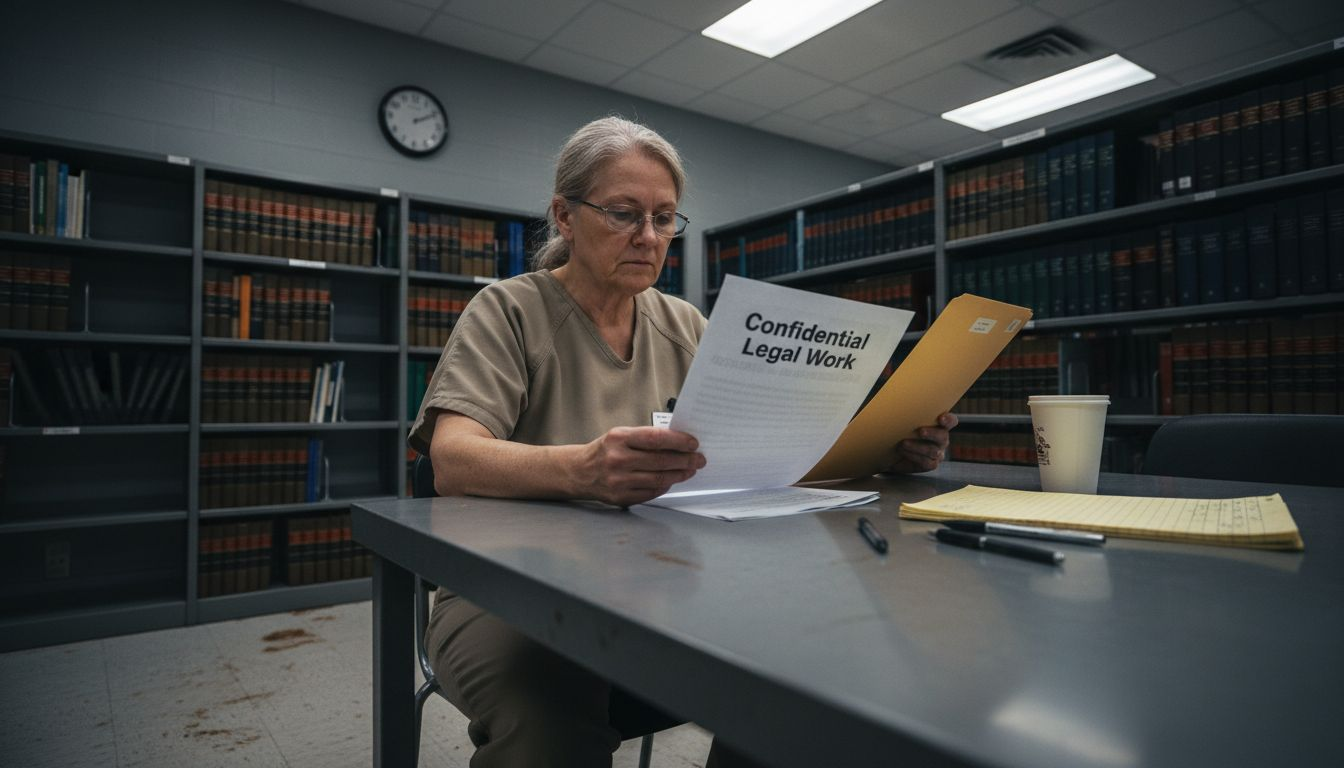
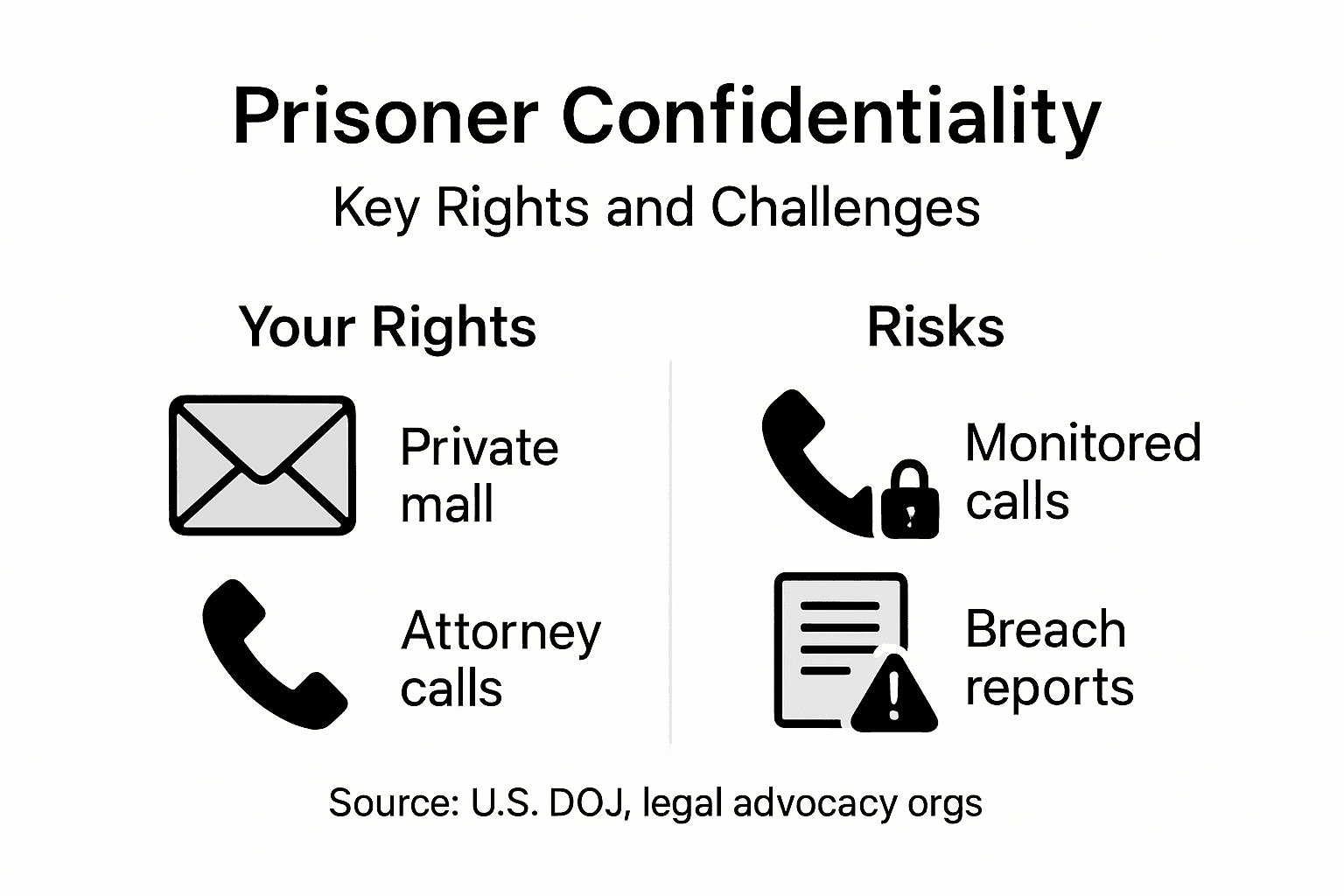
The challenge in prison is that many standard communication methods are not automatically protected. Monitoring of attorney-client emails by Federal Bureau of Prisons systems creates serious vulnerabilities. Phone calls may be recorded. Mail can theoretically be opened and read, though attorney mail often receives special handling. Legal documents you are working on might be seen by cellmates or staff. You need to understand these vulnerabilities so you can communicate strategically. Some facilities have special procedures for legal mail or attorney visits that provide better protection than regular communication channels. Ask your facility’s legal department or law library staff about how your prison handles attorney communications specifically.
When working with legal document preparation services, the confidentiality protections should operate the same way as with a traditional attorney. Attorney-client privilege extends to written communications and electronic formats in all forms. This means the documents you submit, drafts you receive, and correspondence about your case are all protected. Any service helping you prepare legal materials should maintain strict confidentiality about your case details, personal information, and legal strategy. They should not share your information with prison officials, other inmates, or anyone else without your explicit permission. The documents themselves remain your property, and the contents of your communications about those documents remain confidential.
The practical reality is that you must use layered communication strategies. Use the most protected methods available for your most sensitive information. Understand what each communication channel protects and what it exposes. When submitting documents to legal services, ask about their security practices. Request that sensitive materials be marked confidential if your facility honors such designations. Keep copies of communications about your case in a secure location within your cell. Build your legal case using information you know is protected or at least treated carefully.
Pro tip: Always label documents clearly as “Attorney-Client Privileged” or “Confidential Legal Work,” use your facility’s designated legal mail procedures whenever available, and maintain a separate file of confidential legal materials separate from general correspondence to maximize protection.
Legal Framework Governing Confidentiality Rights
Your right to confidential legal communications exists because of a combination of constitutional protections and federal laws that specifically safeguard prisoners’ rights. The Sixth Amendment guarantees your right to counsel, which inherently includes the right to communicate with that counsel without interference. Beyond the Constitution, federal statutes create specific protections for incarcerated individuals. These laws recognize that you cannot mount an effective legal defense if you cannot speak freely with your attorney about your case. Courts have consistently held that confidentiality is not a luxury but a necessity for the American justice system to work fairly, especially for those behind bars who have fewer alternatives for seeking legal help.
Prisoners’ rights to confidential communications are protected through constitutional and statutory frameworks that balance security concerns with access to justice. Courts require that prisons maintain private channels for attorney communications while acknowledging that facilities have legitimate security needs. This means your facility cannot simply ban all private communication with lawyers. Reasonable restrictions are permitted, but they cannot eliminate your ability to communicate confidentially. For example, a prison can require that attorney calls happen during business hours or that visits occur in designated visitation areas, but it cannot routinely monitor those calls or allow guards to listen in. The distinction matters enormously because it means your rights exist even in a secure environment.
Federal law specifically addresses prisoners’ rights violations. The Civil Rights of Institutionalized Persons Act enforces protections for inmates including confidentiality rights and authorizes the Department of Justice to investigate and prosecute systemic violations. This means if your facility systematically violates your confidentiality rights, there is a legal mechanism to hold them accountable. State laws often provide additional protections beyond the federal baseline. Some states have enacted specific statutes protecting inmate attorney communications or limiting how prison officials can monitor privileged communications. Understanding that these laws exist gives you a foundation to assert your rights when they are violated.
The practical impact is that you have legal standing to protect your confidential communications. If your facility opens attorney mail, records attorney calls without proper procedures, or shares information about your legal work with other inmates or staff, these actions may violate your rights. Documenting violations becomes important. Keep records of when communications occurred, what format they took, and any evidence that they were not kept confidential. This documentation can support a future legal claim if necessary. When you work with legal services, you are also protected by this framework because those providing professional legal assistance occupy a similar confidential role as attorneys themselves.
Pro tip: Document any instances where your confidential legal communications appear to have been monitored, intercepted, or shared, including dates and details, and include this documentation in your legal file as evidence of potential rights violations.
Risks and Consequences of Breaches
When confidentiality breaks down in a prison setting, the consequences ripple outward in ways that can devastate your case and your safety. A breach occurs when confidential information about your legal communications, case strategy, or personal details shared with your attorney gets exposed to people who should not have access to it. This might happen through careless handling by staff, intentional monitoring, or even accidental disclosure. The moment your confidential information leaves the protected sphere of attorney-client communication, you lose control over how it gets used. Prison officials might use the information against you in disciplinary proceedings. Other inmates might learn details that put you at physical risk. Your legal strategy becomes known to everyone involved in your case, eliminating any advantage surprise might have provided.
Privacy breaches in prisons compromise inmates’ safety, dignity, and legal rights through loss of trust, potential retaliation, and serious consequences for your legal position. The immediate danger is physical. If details about your case, your family members, or your vulnerabilities become public knowledge among the general population, other inmates can exploit that information. You might face threats, violence, or extortion based on what was disclosed. Beyond physical safety, breaches destroy your ability to work effectively with legal representatives. Once you know or suspect that confidential information is being monitored or shared, you naturally become guarded. You stop sharing crucial details. You filter what you say. Your legal case suffers because your attorney cannot work with complete information.
The institutional consequences matter too. Breaches create risks to institutional security when inmates disclose sensitive information and can lead to conflicts, loss of trust, and operational disruptions. When prison officials breach confidentiality, they may face legal liability. Your facility could be sued for violating your rights. This creates an interesting dynamic: the institution has incentives to protect confidentiality because breaches expose them to lawsuits. However, those incentives sometimes get overridden by perceived security concerns or simple negligence. Staff might monitor legal communications thinking they are protecting the facility, not realizing they are violating your constitutional rights. The result is a system where your confidentiality depends partly on whether staff understand and respect your rights.
For you personally, a breach means your legal case becomes compromised. Information disclosed to prosecution, opposing counsel, or even to prison officials affects your defense strategy. Sensitive personal information becomes leverage that could be used against you in negotiations or in court. Your reputation within the facility changes if other inmates learn details they should not know. Recovery from a serious breach is difficult. You might file a complaint, pursue a claim against the facility, or try to suppress evidence obtained through a breach, but these processes take time and energy you need for your actual legal case. The best approach is prevention. Choose communication methods carefully. Understand your facility’s procedures. Work with legal services that take confidentiality seriously and can explain their security practices clearly.
Here’s a quick overview of major risks if confidentiality is breached in prison settings:
| Type of Breach Consequence | Impact on Inmate | Impact on Legal Case |
|---|---|---|
| Exposure to other inmates | Increased safety risk | Loss of private case details |
| Staff misuse of information | Risk of retaliation | Strategy compromise |
| Information shared with authorities | Potential new charges | Evidence used against defense |
| Damaged trust in legal services | Hesitation to share information | Weaker case or missed defenses |
| Public release of case details | Harm to reputation | Reduced effectiveness of arguments |
Pro tip: If you suspect a confidentiality breach has occurred, document it immediately with dates, what information was compromised, who you believe disclosed it, and any consequences you experienced, then report it to your attorney or legal service provider right away.
Best Practices for Safeguarding Confidentiality
Protecting your confidential legal information requires a layered approach that combines awareness, strategic action, and understanding of your facility’s procedures. You cannot control everything that happens to your communications in prison, but you can make deliberate choices about how you handle sensitive information. Start by understanding your facility’s specific policies on legal mail, attorney visits, and phone calls. Some prisons have special procedures for attorney communications that provide better protection than regular channels. Ask your facility’s law library staff or legal department officer about these procedures explicitly. Find out which communication methods receive special protection and use those for your most sensitive legal matters. Know the difference between what gets monitored and what does not. This knowledge lets you route information strategically.
When communicating with legal services or your attorney, establish secure communication channels and implement clear protocols for legal correspondence protection. Mark all legal documents and correspondence with clear labels like “Attorney-Client Privileged” or “Confidential Legal Matter.” This labeling creates a paper trail showing you took steps to protect confidentiality. It also educates staff who might otherwise treat your materials carelessly. Keep your own copies of all communications in a secure location within your cell, separate from general correspondence. Use sealed envelopes for attorney mail when permitted. Request certified mail or return receipts so you have evidence that your attorney received documents. These practices create documentation if a breach occurs and provides your attorney with proof of what was sent.
Best practices include strict policies protecting legal mail, limiting monitoring to non-legal communications, and providing secure visitation methods. You should expect that your facility honors attorney mail procedures, restricts access to your legal documents, and maintains confidentiality about your legal representation. If your facility does not appear to follow these standards, document the failures and consider raising the issue with your attorney or a legal aid organization. Be selective about what information you put in writing versus what you discuss during attorney visits or calls. Some information is safer to discuss verbally during a protected call or visit. Other information might need to be in writing as part of formal legal documents. Think strategically about the medium for each piece of information based on how well that medium is protected at your facility.
Build relationships with trusted staff members in your facility’s legal department or law library who understand confidentiality. These individuals can often guide you toward the most protected communication methods. They can also advocate for your rights if you raise concerns about breaches. Keep detailed records of all your legal work, including dates you sent documents, dates you received responses, and what was discussed. This record keeping serves multiple purposes. It helps your attorney track case progress, provides documentation if a breach occurs, and creates evidence if you later need to prove violations of your rights. Finally, communicate openly with your legal service provider or attorney about your concerns regarding confidentiality at your specific facility. They may have experience with your prison’s practices and can recommend specific safeguards tailored to your situation.
Pro tip: Create a dedicated folder or envelope in your cell specifically for legal correspondence and documents, keep it clearly labeled as privileged, store it in the most secure location available to you, and maintain a written index of all materials so you can immediately identify if anything is missing or accessed.
This table summarizes recommended actions to keep communications secure:
| Action Step | Purpose | Who Should Implement |
|---|---|---|
| Use legal mail procedures | Protect sensitive correspondence | Inmates and attorneys |
| Mark documents “Confidential” | Signal privacy requirement | Inmates and legal staff |
| Keep written index of materials | Track if items go missing | Inmates only |
| Request written policy confirmation | Clarify service protections | Inmates engaging legal services |
| Separate confidential from general mail | Prevent accidental access | Inmates |
| Record key dates of correspondence | Support future complaints or claims | Inmates |
Protect Your Confidential Legal Rights with Expert Document Preparation
Navigating the complex legal landscape from behind bars brings unique challenges, especially when it comes to safeguarding your confidential communications and legal documents. This article highlights the critical need for privacy and secure attorney-client privilege in correctional facilities. You want to ensure that sensitive information stays protected and your case is handled with care amid the risks of monitoring and breaches. Prisoner Legal Aid understands these unique obstacles and offers tailored solutions to help you create court-ready documents with full respect for confidentiality and security protocols.

Take control of your legal journey today by using our specialized professional legal document preparation services. We focus on confidentiality, affordability, and fast turnaround so you can trust your vital documents stay secure. Learn more about how our platform safeguards your privacy while assisting with habeas corpus petitions, civil rights claims, and more. Start confidently by visiting Prisoner Legal Aid now and get the support you need to protect your legal rights and build your strongest case.
Frequently Asked Questions
What is confidentiality in legal services?
Confidentiality in legal services refers to the ethical and legal duty of lawyers to keep client information private and not disclose it without explicit permission. It ensures a safe environment for clients to discuss sensitive information freely.
How is confidentiality affected for prisoners?
For prisoners, confidentiality is often compromised due to monitored communication systems in prisons. This can lead to risks where sensitive information might be overheard by staff or other inmates, threatening the privacy of attorney-client conversations.
What are the exceptions to confidentiality in legal services?
Exceptions to confidentiality include situations where a client gives permission to disclose information, a court orders disclosure, or when a lawyer is permitted to share information under specific legal exceptions, such as reporting an ongoing crime.
What should I do if I suspect a breach of confidentiality?
If you suspect a breach of confidentiality, document the occurrence immediately, including dates and what information was compromised. Report this to your attorney or legal service provider right away to seek advice on the next steps.