Facing a legal dispute in an American state court can feel overwhelming, especially when every rule and procedure is unique to your state. For those preparing legal documents and aiming for self-representation, state courts have general jurisdiction over the majority of civil and criminal matters, making understanding their structure and processes vital. This guide breaks down the key steps, court types, and practical strategies to help you advocate for yourself with confidence and clarity.
Table of Contents
- Defining State Court Litigation In The U.S.
- Main Types Of State Court Cases
- Key Steps And Court Procedures Explained
- Jurisdiction, Venue, And Applicable Laws
- Rights And Risks In State-Level Lawsuits
Key Takeaways
| Point | Details |
|---|---|
| Understanding State Courts | State courts serve as the main venues for most civil and criminal disputes, with varying procedures and rules by state. |
| Types of Cases | State courts handle civil cases like personal injury and contract disputes, and criminal cases including misdemeanors and felonies. |
| Litigation Process | The litigation process involves structured stages such as initial pleadings and discovery, requiring strict adherence to procedure. |
| Jurisdictional Awareness | Awareness of jurisdiction and venue is essential as they dictate the court’s authority and the appropriate location for legal proceedings. |
Defining State Court Litigation in the U.S.
State court litigation represents the fundamental legal framework where most civil and criminal disputes within a specific state are resolved. These courts serve as the primary judicial venues where individuals and organizations seek legal remedies and justice through structured legal proceedings. State courts have general jurisdiction established by each state’s unique constitutional provisions and statutory laws.
The structure of state court systems typically follows a hierarchical model with multiple levels of judicial review. Most states feature a similar organizational framework that includes:
- Trial Courts: The initial judicial level where most legal cases begin
- Intermediate Appellate Courts: Review trial court decisions for potential legal errors
- State Supreme Court: The highest judicial authority within the state system
Each state maintains its own independent court system, which means judicial procedures, rules of evidence, and legal interpretations can vary significantly between different states. Unlike federal courts with limited jurisdiction, state courts handle a broad range of legal matters including criminal prosecutions, civil disputes, family law cases, and probate proceedings.
Here is a comparative overview of state and federal court systems to illustrate their differences:
| Aspect | State Courts | Federal Courts |
|---|---|---|
| Jurisdiction | Broad, covers most legal matters | Limited, specific case types |
| Governing Law | State constitutions and statutes | Federal constitution and statutes |
| Types of Cases | Civil, criminal, family, probate | Federal crimes, constitutional issues |
| Court Structure | Varies by state, three main tiers | Standardized, three court levels |
| Legal Interpretation | Depends on state precedent | Based on federal precedent |
The complexity of state court litigation demands a nuanced understanding of jurisdictional boundaries and procedural requirements. Attorneys and self-represented litigants must navigate intricate legal landscapes that can differ dramatically from one state to another. This variation underscores the importance of understanding specific state legal frameworks and court-specific rules when pursuing legal action.
Pro tip: Always verify the specific procedural requirements and jurisdictional rules of the state where your legal matter will be heard, as these can significantly impact case strategy and potential outcomes.
Main Types of State Court Cases
State courts handle an extensive range of legal matters that encompass nearly every aspect of civil and criminal legal disputes within their jurisdictional boundaries. Civil courts manage diverse legal challenges that impact individuals, businesses, and community interactions through multiple legal proceedings.
The primary categories of state court cases typically include:
-
Civil Cases:
- Personal injury claims
- Contract disputes
- Property conflicts
- Employment litigation
- Medical malpractice suits
-
Criminal Cases:
- Misdemeanor offenses
- Felony prosecutions
- State-level criminal violations
- Traffic law infractions
- Drug-related charges
Specialized Court Types also play a critical role in addressing specific legal domains. State courts include numerous specialized judicial venues) designed to handle unique legal challenges with targeted expertise. These specialized courts might focus on family law, juvenile justice, probate matters, or mental health legal proceedings.
Below is a quick reference to common specialized state courts and their primary functions:
| Specialized Court | Main Focus | Typical Cases Handled |
|---|---|---|
| Family Court | Marriage and children issues | Divorce, custody, adoption |
| Probate Court | Estate settlement | Wills, trusts, guardianships |
| Juvenile Court | Minors’ legal matters | Delinquency, child protection |
| Drug Court | Addiction-related crimes | Substance abuse, rehabilitation |
The complexity of state court litigation reflects the intricate nature of legal disputes within each jurisdiction. While federal courts handle specific constitutional and interstate matters, state courts remain the primary mechanism for resolving most legal conflicts. Understanding the nuanced differences between various court types and their jurisdictional boundaries is crucial for anyone navigating the American legal system.
Pro tip: Always research the specific court type and jurisdiction most appropriate for your legal matter to ensure proper filing and procedural compliance.
Key Steps and Court Procedures Explained
Litigation is a structured legal process designed to resolve legal disputes through systematic court procedures. Understanding these steps is crucial for anyone navigating the state court system, whether as a plaintiff, defendant, or interested party.
The typical litigation process involves several critical stages:
- Initial Pleadings:
- Filing the complaint by the plaintiff
- Serving legal documents to the defendant
- Defendant’s formal response or answer
- Potential motions to dismiss
- Discovery Phase:
- Exchange of relevant documents
- Written interrogatories
- Depositions and witness statements
- Expert testimony preparation
Court procedures involve multiple strategic steps that determine how legal conflicts will be resolved. The discovery phase allows both parties to gather evidence, understand each other’s arguments, and potentially negotiate a settlement before proceeding to trial.

After discovery, the litigation process may progress through several additional stages, including pretrial motions, settlement negotiations, and potentially a full trial. Some cases might be resolved through summary judgment, where a judge determines there are no significant factual disputes requiring a complete trial. Courts also frequently encourage alternative dispute resolution methods like mediation to reduce trial complexity and legal expenses.
Pro tip: Meticulously document every interaction and piece of evidence throughout the litigation process, as these records can become critically important during discovery and potential trial proceedings.
Jurisdiction, Venue, and Applicable Laws
Jurisdiction determines a court’s legal authority to hear and resolve specific legal disputes. Understanding the complex interplay between jurisdiction, venue, and applicable laws is crucial for navigating the state court system effectively.
Two primary types of jurisdiction exist in state court proceedings:
-
Subject Matter Jurisdiction:
- Authority over specific types of legal cases
- Determined by case nature and legal claims
- Varies between different court levels
- Fundamental to case procedural validity
-
Personal Jurisdiction:
- Control over parties involved in the lawsuit
- Requires legal connection to the geographic area
- Established through defendant’s residence or actions
- Critical for enforcing court judgments
Venue selection involves strategic legal considerations that impact case proceedings. The appropriate geographic location for a trial depends on multiple factors, including where the incident occurred, parties’ residences, and witness convenience. Venue rules ensure fairness and practicality in legal proceedings, preventing unnecessary hardship on participants.
Applicable laws in state court litigation are primarily determined by state constitutions, statutes, and precedential court decisions. Each state maintains unique legal frameworks that govern civil and criminal proceedings, making it essential for litigants to understand specific jurisdictional requirements and local legal standards that might impact their case.
Pro tip: Always verify the specific jurisdictional requirements and venue rules for your particular state before initiating any legal proceedings to prevent potential case dismissal.
Rights and Risks in State-Level Lawsuits
Legal system challenges impact lawsuit participants significantly, presenting complex rights and potential risks that demand careful navigation. Understanding these dynamics is crucial for individuals preparing to engage in state-level litigation.
Key risks in state-level lawsuits include:
-
Financial Risks:
- Potential high legal expenses
- Risk of paying opponent’s legal costs
- Potential economic damages
- Unexpected litigation expenses
-
Legal Procedural Risks:
- Case dismissal possibilities
- Complex jurisdictional challenges
- Potential adverse judgments
- Lengthy legal proceedings
Legal system abuse increases litigation costs for all parties involved. Frivolous lawsuits and unnecessary legal actions can create substantial economic burdens, potentially causing prolonged legal battles that drain financial and emotional resources. These challenges underscore the importance of carefully evaluating the merits of any potential legal action.
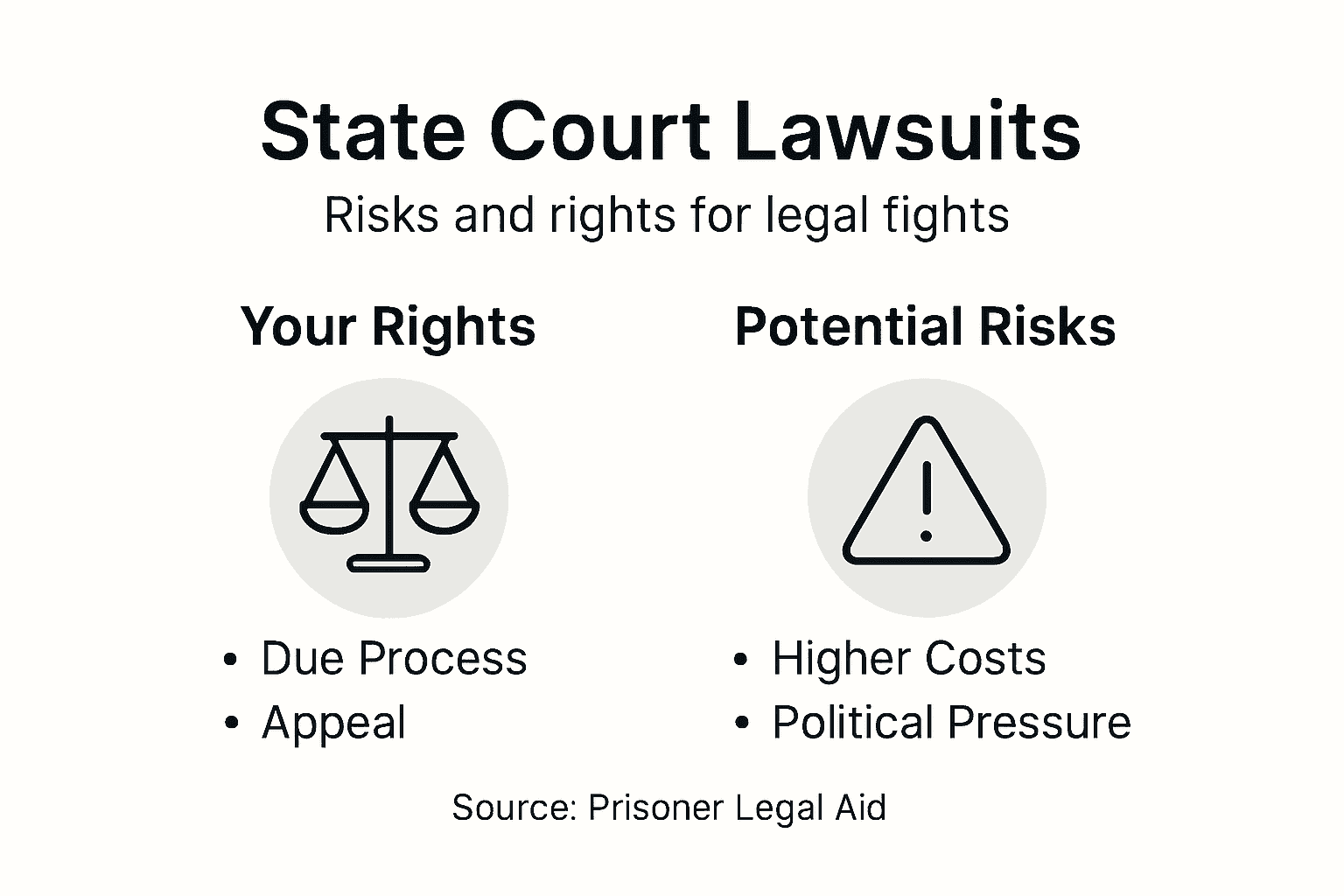
State courts increasingly face political pressures that can impact judicial independence and decision-making processes. Litigants must remain aware that external influences might subtly shape legal proceedings, potentially affecting the perceived fairness and impartiality of judicial outcomes. Maintaining realistic expectations and understanding potential systemic limitations becomes crucial when pursuing state-level legal remedies.
Pro tip: Conduct thorough preliminary research and consult with legal professionals to assess the potential risks and probable outcomes before initiating any state-level lawsuit.
Navigate State Court Litigation With Confidence and Expert Help
State court litigation presents many challenges from understanding jurisdiction to managing complex procedural rules. If you feel overwhelmed by legal jargon like personal jurisdiction or discovery phases this is common. Many self-represented individuals and incarcerated persons face hurdles in drafting court-ready documents that meet strict state court requirements. Without proper legal documentation you risk missed deadlines and dismissed cases that can cost you dearly.
At Prisoner Legal Aid we specialize in helping you turn confusing legal processes into clear next steps. Our professional document preparation services are designed for those engaged in federal and state court litigation who need help with habeas corpus petitions, civil rights claims, or appellate briefs. We focus on affordability, confidentiality, and fast turnaround so you get precisely the support you need to strengthen your case and avoid procedural pitfalls.
Ready to take control of your state court fight and ensure your filings meet mandatory court standards Explore our services today and get started on your path to justice.

Don’t let legal complexities stall your case. Visit Prisoner Legal Aid to request document preparation support now and move forward with confidence.
Frequently Asked Questions
What is state court litigation?
State court litigation refers to the legal processes where civil and criminal disputes are resolved within the courts of a specific state. These courts have general jurisdiction and handle a wide range of legal matters.
What are the main types of cases handled by state courts?
State courts address various types of cases, including civil cases such as personal injury claims and contract disputes, as well as criminal cases like misdemeanors and felonies. Specialized courts also exist for family law, probate matters, and juvenile justice.
How does the litigation process work in state courts?
The litigation process generally involves several stages, starting with initial pleadings, followed by a discovery phase, and potentially leading to trial or settlement negotiations. Each phase is structured to ensure orderly resolution of disputes.
What should I consider regarding jurisdiction and venue in state court cases?
Jurisdiction refers to a court’s authority to hear a case, while venue involves selecting the appropriate geographic location for the court proceedings. It’s crucial to understand both aspects to ensure compliance with legal requirements and to maximize the chances of a favorable outcome.