

Facing a legal challenge without professional support can feel overwhelming, especially when preparing documents for a United States court. For many incarcerated individuals and self-represented litigants, understanding how to create a powerful legal brief is key to clearly presenting their side of a dispute. This guide offers practical insights on building a well-structured legal brief, breaking down complex rules into step-by-step instructions so you can communicate your legal arguments professionally and effectively.
Table of Contents
- Defining A Legal Brief And Its Purpose
- Types Of Legal Briefs In U.S. Courts
- Essential Elements And Required Structure
- Legal Standards And Procedural Rules
- Common Mistakes And How To Avoid Them
Key Takeaways
| Point | Details |
|---|---|
| Legal Brief Definition | A legal brief is a structured document crucial for presenting legal arguments in court, combining factual background, legal precedents, and persuasive reasoning. |
| Types of Legal Briefs | Different types of legal briefs serve distinct purposes in U.S. courts, including Trial Briefs, Appellate Briefs, and Amicus Curiae Briefs, each with specific audiences and strategic roles. |
| Essential Structure | A comprehensive legal brief must include key sections such as a statement of facts, legal issues, arguments, and a conclusion, all organized for clarity and coherence. |
| Common Mistakes | Common pitfalls include excessive jargon, poor structure, and ignoring procedural requirements; avoiding these mistakes is key to effective legal communication. |
Defining a Legal Brief and Its Purpose
A legal brief is a critical document that serves as the backbone of legal arguments in court proceedings. Written legal arguments submitted to courts provide lawyers and parties an opportunity to persuade judges by presenting comprehensive, structured perspectives on complex legal issues.
These documents are far more than simple written statements. They represent carefully crafted narratives that combine multiple elements to effectively communicate a party’s legal stance. Legal briefs require sophisticated skills in research and persuasion to construct compelling arguments.
Key characteristics of legal briefs include:
- Presenting factual background of a case
- Explaining relevant legal precedents
- Outlining specific legal arguments
- Requesting a particular ruling or judgment
- Demonstrating how existing laws support the party’s position
Legal briefs typically follow a structured format that allows judges to quickly understand the core legal arguments. They are not narrative stories but precise, logical documents designed to systematically present a legal perspective. Professional legal briefs must balance academic rigor with persuasive storytelling, transforming complex legal concepts into clear, digestible arguments.
Pro tip: Always ensure your legal brief maintains a professional tone and focuses on substantive legal reasoning rather than emotional appeals.
Types of Legal Briefs in U.S. Courts
In the complex landscape of American legal proceedings, different types of legal briefs serve distinct purposes within the judicial system. Briefs vary significantly based on their intended audience and procedural context, presenting unique challenges and requirements for legal professionals.
Court systems recognize multiple brief categories that address specific legal needs and stages of litigation. These variations ensure that legal arguments are presented effectively and appropriately across different judicial contexts.
Key types of legal briefs in U.S. Courts include:
- Trial Briefs: Submitted during initial court proceedings to outline case arguments
- Appellate Briefs: Presented to higher courts challenging previous judicial decisions
- Amicus Curiae Briefs: Filed by interested third parties providing additional perspectives
- Motion Briefs: Requesting specific legal actions or rulings from the court
- Pretrial Briefs: Submitted before actual trial to establish preliminary legal arguments
Each brief type demands meticulous preparation and adherence to specific procedural guidelines. Legal professionals must carefully craft these documents to effectively communicate complex legal arguments, ensuring they meet the precise requirements of the specific court and judicial context.
Here’s a comparison of major legal brief types and their unique roles in U.S. courts:
| Brief Type | Main Purpose | Typical Audience | Strategic Importance |
|---|---|---|---|
| Trial Brief | Outlines case arguments | Trial judges | Frames key issues pre-trial |
| Appellate Brief | Challenges lower court ruling | Appellate judges | Seeks to overturn decisions |
| Amicus Curiae Brief | Offers outside perspective | Appellate judges | Influences interpretation of law |
| Motion Brief | Requests legal action | Trial or appeal court | Initiates procedural decisions |
| Pretrial Brief | Sets pretrial legal position | Trial judges | Establishes legal footing early |
Understanding the nuanced differences between brief types is crucial for developing a strategic legal approach.
Pro tip: Always confirm the specific formatting and submission requirements for your brief type with the relevant court’s procedural guidelines.
Essential Elements and Required Structure
Legal briefs require a meticulously organized structure that communicates complex legal arguments with precision and clarity. A conventional legal brief follows a structured approach to presenting arguments, ensuring that judges can easily follow the logical progression of legal reasoning.
Case briefs typically incorporate specific foundational sections that systematically break down legal arguments and contextual information. These standardized components help create a comprehensive and persuasive legal document.
Essential elements of a comprehensive legal brief include:
- Caption: Identifying case name, court, and relevant legal parties
- Table of Contents: Outlining brief’s organizational structure
- Statement of Facts: Presenting objective case background
- Legal Issues: Clearly defining specific legal questions
- Argument Section: Developing legal reasoning with supporting precedents
- Conclusion: Summarizing requested judicial action
- Certificate of Service: Documenting brief’s official submission
Each section serves a distinct purpose in constructing a compelling legal narrative. The argument section demands particular attention, requiring writers to weave together factual evidence, legal precedents, and persuasive reasoning into a coherent and convincing presentation.
Effective legal briefs transform complex legal arguments into clear, structured narratives that guide judicial understanding.
Pro tip: Always review your brief’s structure against specific court requirements to ensure complete procedural compliance.
Legal Standards and Procedural Rules
The landscape of legal briefs is governed by intricate procedural standards that ensure fairness and consistency across judicial proceedings. Legal briefs must meticulously comply with court-specific formatting and substantive requirements, which can vary dramatically between different court systems and jurisdictional levels.
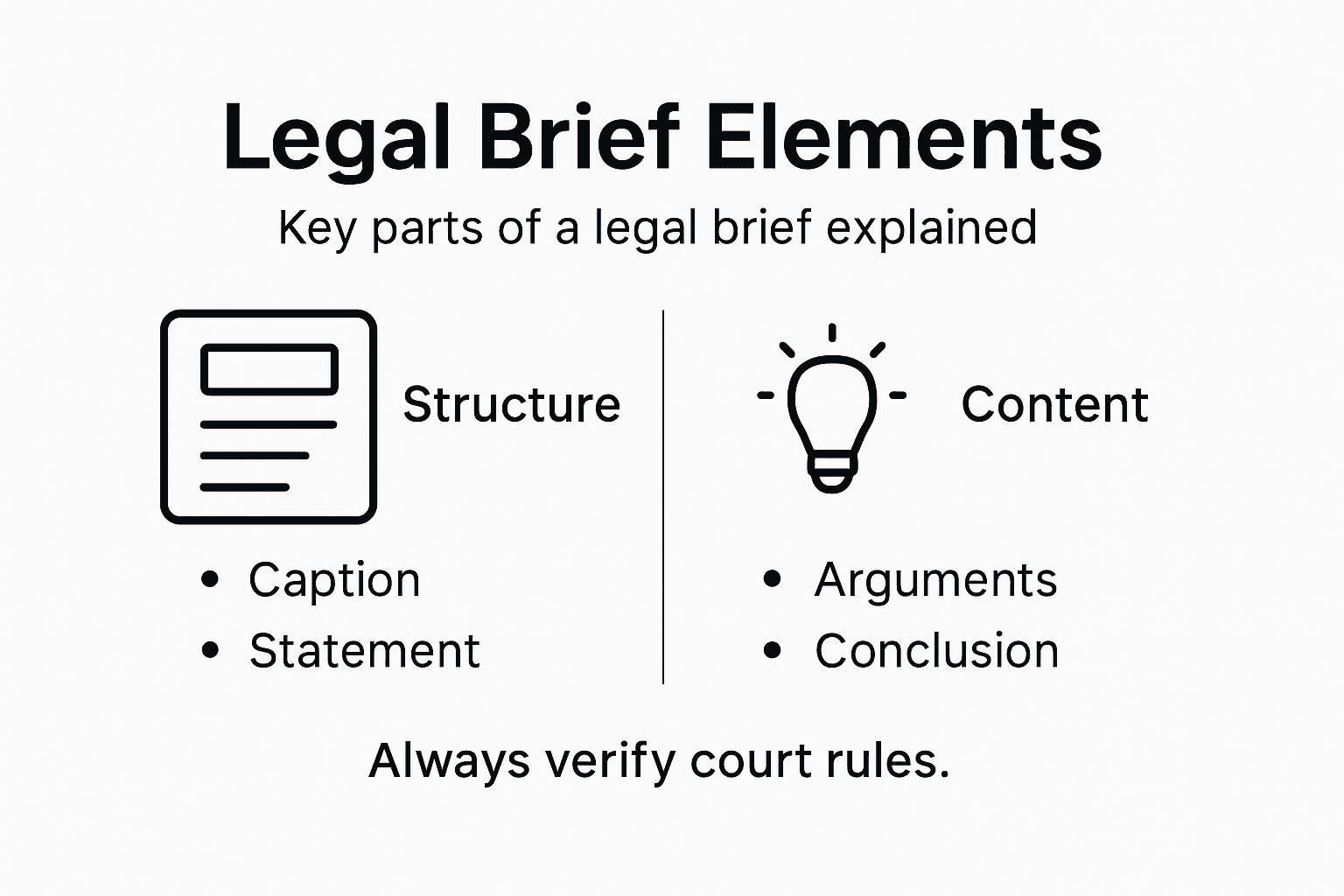
Court rules specify precise structural and content requirements for legal documents, establishing a standardized framework that governs how legal arguments are presented and evaluated. These regulations serve as critical guardrails ensuring transparency, predictability, and procedural integrity in legal communications.
Key procedural standards that legal briefs must typically address include:
- Page Limitations: Strict maximum page counts for different brief types
- Font Requirements: Specific typeface, size, and margin specifications
- Citation Formatting: Adherence to recognized legal citation styles
- Filing Deadlines: Precise timelines for document submission
- Electronic Submission Guidelines: Technical requirements for digital filings
- Language and Tone Restrictions: Maintaining professional and objective discourse
- Evidence Presentation Standards: Rules governing factual substantiation
These procedural rules are not merely bureaucratic formalities but fundamental mechanisms that maintain the judicial system’s credibility. They ensure that all parties have equal opportunities to present arguments and that judicial review remains systematic and fair.
Procedural compliance is not optional – it is a fundamental requirement for effective legal communication.
Pro tip: Always consult the specific court’s local rules well in advance of your brief’s preparation to ensure complete procedural compliance.
Common Mistakes and How to Avoid Them
Navigating the complex landscape of legal brief writing requires meticulous attention to detail and strategic communication. Legal writing demands prioritizing clarity and plain English to effectively convey arguments and prevent misunderstandings that could compromise the brief’s persuasiveness.
The most common pitfalls in legal brief preparation can significantly undermine the document’s effectiveness, potentially jeopardizing the entire legal argument. Understanding these mistakes is crucial for crafting a compelling and professional legal document that meets judicial scrutiny.
Frequent mistakes legal professionals and self-represented litigants should avoid include:
- Excessive Legal Jargon: Overusing complex terminology that obscures core arguments
- Poor Citation Formatting: Incorrect or inconsistent legal citation styles
- Weak Factual Substantiation: Insufficient evidence supporting legal claims
- Disorganized Argument Structure: Lack of logical flow and coherent reasoning
- Emotional Language: Inserting subjective or inflammatory statements
- Overlooking Procedural Requirements: Failing to meet specific court guidelines
- Verbose Writing: Using unnecessarily complex or lengthy explanations
Successful legal briefs transform complex legal concepts into clear, concise narratives that judges can readily understand. This requires a strategic approach that balances technical precision with accessible communication.
Below is a summary of common legal brief mistakes and targeted tips to avoid them:
| Mistake Category | Impact on Brief | How to Avoid |
|---|---|---|
| Overusing Jargon | Reduces clarity | Use plain, direct language |
| Weak Evidence | Undermines credibility | Support claims with documentation |
| Poor Structure | Confuses legal arguments | Follow logical, organized format |
| Ignoring Procedures | Leads to rejection | Double-check court rules early |
| Emotional Appeals | Diminishes professionalism | Rely on facts and logic only |
Clarity is not simplification, but the art of making complex ideas comprehensible.
Pro tip: Have an objective third party review your brief to identify potential clarity and communication issues before submission.
Elevate Your Legal Briefs with Expert Document Preparation
Understanding what a legal brief is and why it matters in court can be overwhelming, especially with the strict procedural rules and the need for clear, persuasive arguments. Many individuals face the challenge of navigating complex legal standards and formatting requirements while trying to present their case effectively. If you recognize the importance of submitting a well-structured legal brief but worry about the possible mistakes such as weak factual support or ignoring court procedures, you are not alone.

At Prisoner Legal Aid, we specialize in helping incarcerated and self-represented clients draft, format, and prepare legal briefs and other crucial legal documents to meet all court standards across federal and state jurisdictions. Whether you need assistance with appellate briefs, habeas corpus petitions, or civil rights claims, our affordable and confidential services ensure your documents are court-ready. Do not risk rejection due to procedural errors or unclear arguments. Start your journey toward stronger legal submissions today by visiting Prisoner Legal Aid. For more details on our full range of services, explore our landing page and get the support your case deserves.
Frequently Asked Questions
What is a legal brief?
A legal brief is a critical document providing written legal arguments submitted to courts to persuade judges on complex legal issues and present a party’s legal stance.
What are the main types of legal briefs?
The main types of legal briefs include trial briefs, appellate briefs, amicus curiae briefs, motion briefs, and pretrial briefs, each serving distinct purposes in the judicial process.
What essential elements should a legal brief include?
A legal brief should include a caption, table of contents, statement of facts, legal issues, argument section, conclusion, and a certificate of service to ensure clarity and compliance.
What common mistakes should be avoided when writing a legal brief?
Common mistakes include excessive jargon, poor citation formatting, weak factual substantiation, disorganized structure, emotional language, and not adhering to procedural requirements.